The short answer
For healthy adults wearing the right size, graduated compression at 20–30 mmHg is well-tolerated and safe for daily use. The side effects people report are almost always one of three things: a sock that is too small, a cuff that has been rolled or folded, or dry skin. All three are fixable in a day. A small group of people should not self-prescribe compression at all, and that list is at the bottom of this page.
Side effects that are normal (and settle)
- Light indentation lines at the top of the calf that fade within ten to twenty minutes of taking the socks off.
- Awareness of pressure for the first hour of the first few days. Almost everyone stops noticing it by day three.
- Slightly tired calves in the first week — your leg muscles are working with a new load pattern.
- Dryness or mild itching, especially in winter or if you moisturise right before putting the socks on.
- Warmth in hot climates. Breathable knit helps, but any second layer on the leg is warmer than bare skin.
Signs something is wrong — act on these
Take the socks off if you get any of the following, and re-check your size:
- Numbness, pins and needles, or burning in the toes or foot
- Toes that go pale, blue, white or noticeably cold
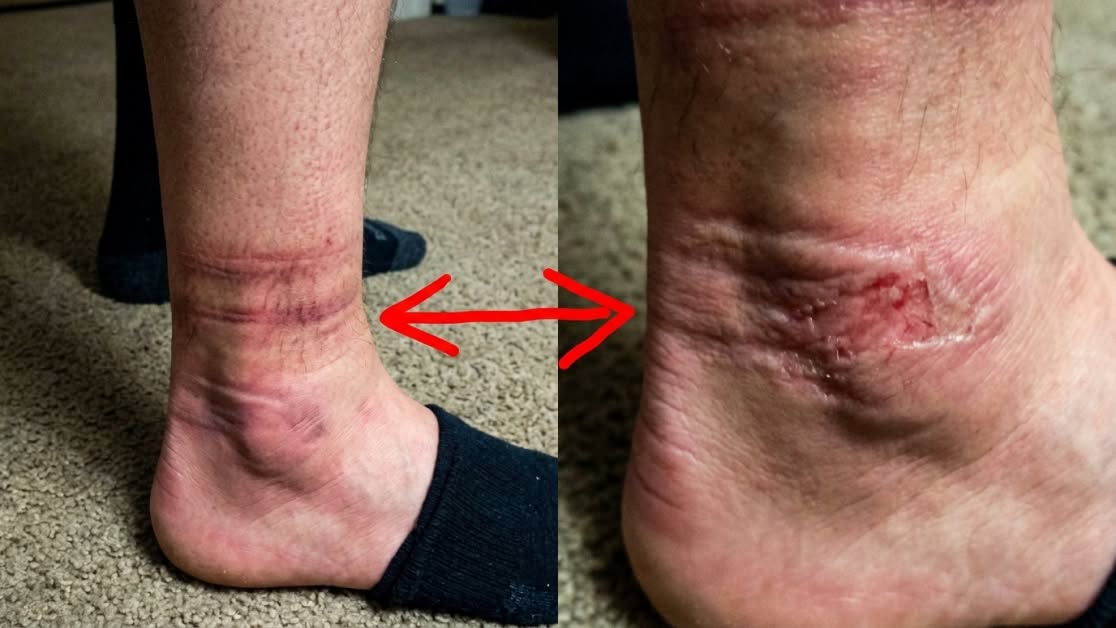
- Deep welts or grooves that are still visible half an hour after removal
- Skin that breaks, blisters or bleeds under the cuff
- Pain rather than firmness — compression should never actually hurt
- Swelling that gets visibly worse rather than better after a few days of wear
Nine times out of ten these come from a sock that is a size too small at the calf, not from the compression level. Measure the widest part of your calf in the morning and compare it against the size guide before you assume compression is not for you.
The three fit mistakes behind most complaints
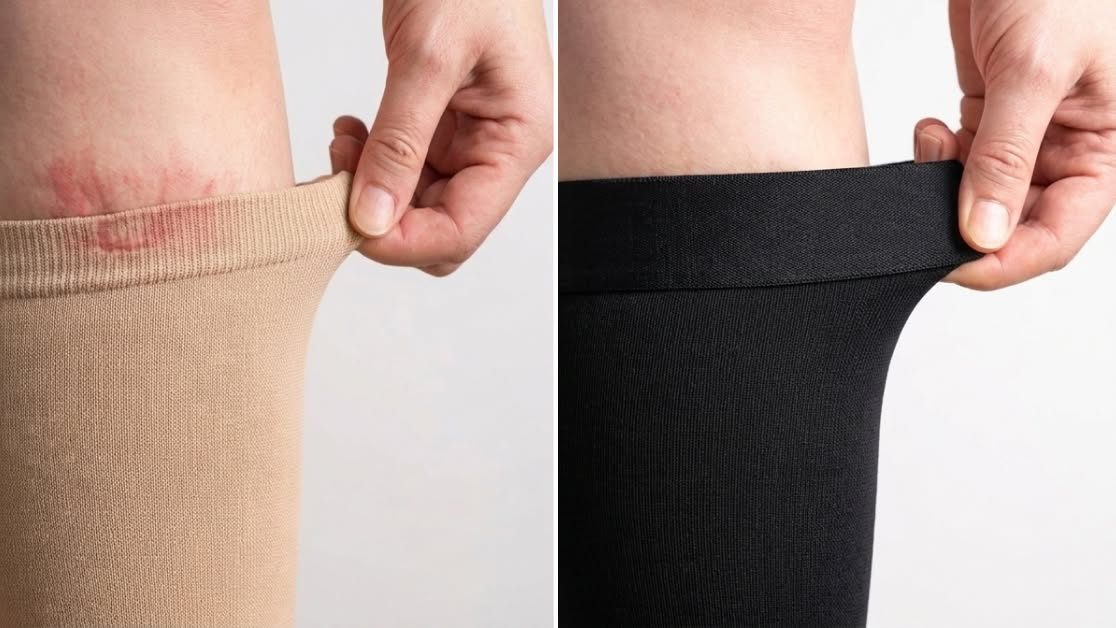
- Rolling the top band down. A rolled cuff doubles the fabric and turns a wide, spread hold into a narrow tourniquet at the widest part of the leg. Unroll it flat or pull the sock down slightly instead.
- Bunching at the ankle. Wrinkles concentrate pressure into ridges. Smooth the sock from the heel upward every time — the heel-pocket method takes ten seconds.
- Sizing by shoe size alone. Shoe size is a proxy; calf circumference is the real measurement. Two people who both wear a US 9 can be four inches apart at the calf.
Who should check with a clinician first
Compression changes how blood and fluid move in the leg, so a few conditions need professional input before you start:
- Peripheral arterial disease (PAD) or poor arterial flow. If the arteries are already narrowed, external pressure can reduce blood supply rather than help return. This is the most important contraindication.
- Untreated or suspected DVT. Compression has a role in DVT care, but only under medical direction — never start it yourself on a hot, swollen, painful calf. Get it assessed urgently.
- Uncontrolled or decompensated heart failure. Moving fluid out of the legs increases central circulating volume.
- Severe peripheral neuropathy. If you can't feel pressure or rubbing, you can't feel a problem developing. See compression socks for diabetics.
- Active skin infection, dermatitis, ulcers or open wounds on the lower leg.
- Known allergy to elastane, nylon or the dyes used in knitted hosiery.
This page is general education, not medical advice. If you have a diagnosed circulatory condition, your clinician's guidance takes priority over anything written here.
Pregnancy, flying and older wearers
Compression is routinely recommended in pregnancy for swelling and vein support, and on long flights to reduce pooling and clot risk — both are among the best-evidenced uses. Older wearers benefit too, but hands and grip matter: if pulling socks on is hard, use a donning aid or ask about it in our putting-them-on guide.
How to start safely
- Measure your calf in the morning and pick your size from the chart.
- Wear them for four hours on day one, then a full day from day two.
- Take them off at night unless a clinician told you otherwise.
- Check your skin each evening for the warning signs above.
- Wash after every wear so the elastane recovers its shape.
Do that and compression is about as low-risk as leg care gets. For the pressure ranges themselves, read mmHg levels explained.




%20--%3e%3csvg%20version='1.1'%20baseProfile='tiny'%20id='Layer_1'%20xmlns='http://www.w3.org/2000/svg'%20xmlns:xlink='http://www.w3.org/1999/xlink'%20x='0px'%20y='0px'%20viewBox='0%200%20512%20210.2'%20xml:space='preserve'%3e%3cpath%20id='XMLID_34_'%20d='M93.6,27.1C87.6,34.2,78,39.8,68.4,39c-1.2-9.6,3.5-19.8,9-26.1c6-7.3,16.5-12.5,25-12.9%20C103.4,10,99.5,19.8,93.6,27.1%20M102.3,40.9c-13.9-0.8-25.8,7.9-32.4,7.9c-6.7,0-16.8-7.5-27.8-7.3c-14.3,0.2-27.6,8.3-34.9,21.2%20c-15,25.8-3.9,64,10.6,85c7.1,10.4,15.6,21.8,26.8,21.4c10.6-0.4,14.8-6.9,27.6-6.9c12.9,0,16.6,6.9,27.8,6.7%20c11.6-0.2,18.9-10.4,26-20.8c8.1-11.8,11.4-23.3,11.6-23.9c-0.2-0.2-22.4-8.7-22.6-34.3c-0.2-21.4,17.5-31.6,18.3-32.2%20C123.3,42.9,107.7,41.3,102.3,40.9%20M182.6,11.9v155.9h24.2v-53.3h33.5c30.6,0,52.1-21,52.1-51.4c0-30.4-21.1-51.2-51.3-51.2H182.6z%20M206.8,32.3h27.9c21,0,33,11.2,33,30.9c0,19.7-12,31-33.1,31h-27.8V32.3z%20M336.6,169c15.2,0,29.3-7.7,35.7-19.9h0.5v18.7h22.4V90.2%20c0-22.5-18-37-45.7-37c-25.7,0-44.7,14.7-45.4,34.9h21.8c1.8-9.6,10.7-15.9,22.9-15.9c14.8,0,23.1,6.9,23.1,19.6v8.6l-30.2,1.8%20c-28.1,1.7-43.3,13.2-43.3,33.2C298.4,155.6,314.1,169,336.6,169z%20M343.1,150.5c-12.9,0-21.1-6.2-21.1-15.7c0-9.8,7.9-15.5,23-16.4%20l26.9-1.7v8.8C371.9,140.1,359.5,150.5,343.1,150.5z%20M425.1,210.2c23.6,0,34.7-9,44.4-36.3L512,54.7h-24.6l-28.5,92.1h-0.5%20l-28.5-92.1h-25.3l41,113.5l-2.2,6.9c-3.7,11.7-9.7,16.2-20.4,16.2c-1.9,0-5.6-0.2-7.1-0.4v18.7C417.3,210,423.3,210.2,425.1,210.2z%20'/%3e%3cg%3e%3c/g%3e%3cg%3e%3c/g%3e%3cg%3e%3c/g%3e%3cg%3e%3c/g%3e%3cg%3e%3c/g%3e%3cg%3e%3c/g%3e%3c/svg%3e)