What a varicose vein actually is
Leg veins carry blood upward against gravity using a series of one-way valves. When a valve stops sealing properly, blood flows backwards and collects in the vein below it. That extra volume stretches the vein wall, which pulls the next valve apart, which lets more blood back — a self-reinforcing loop. The stretched, twisted result sitting close to the skin is a varicose vein.
Because the mechanism is pressure, anything that raises venous pressure for long periods makes it more likely: standing occupations, prolonged sitting, pregnancy, extra weight, age, and above all family history. Symptoms are usually worse at the end of the day and in hot weather, and better after a night's sleep or with the legs elevated — that pattern alone tells you it is a pressure problem.
What compression can and cannot do
| Compression can | Compression cannot |
|---|---|
| Reduce aching, throbbing and heaviness | Close or remove an existing varicose vein |
| Reduce ankle and lower-leg swelling | Restore a failed valve |
| Support the valves so they seal more effectively while worn | Fade the visible appearance permanently |
| Make standing and sitting days more tolerable | Replace assessment if symptoms are worsening |
| Form part of conservative care recommended before procedures | Treat skin changes, ulceration or a clot |
Anyone selling you a sock as a cure for varicose veins is misleading you. What we sell is effective symptom management that is comfortable enough to actually wear every day — which is the part most people fail at with medical hosiery.
What compression level for varicose veins
| Level | Typically used for |
|---|---|
| 15–20 mmHg | Mild spider veins, early symptoms, prevention in a standing job |
| 20–30 mmHg | Symptomatic varicose veins, daily aching and swelling — what TrueFit delivers |
| 30–40 mmHg | Diagnosed chronic venous insufficiency, post-procedure protocols, skin changes — prescribed and fitted |
More context in the mmHg levels guide.
When to see a doctor instead
- Bleeding from a varicose vein — urgent care
- A hard, hot, red, painful lump over a vein — possible superficial thrombophlebitis
- Sudden swelling in one leg with pain — possible DVT, urgent assessment
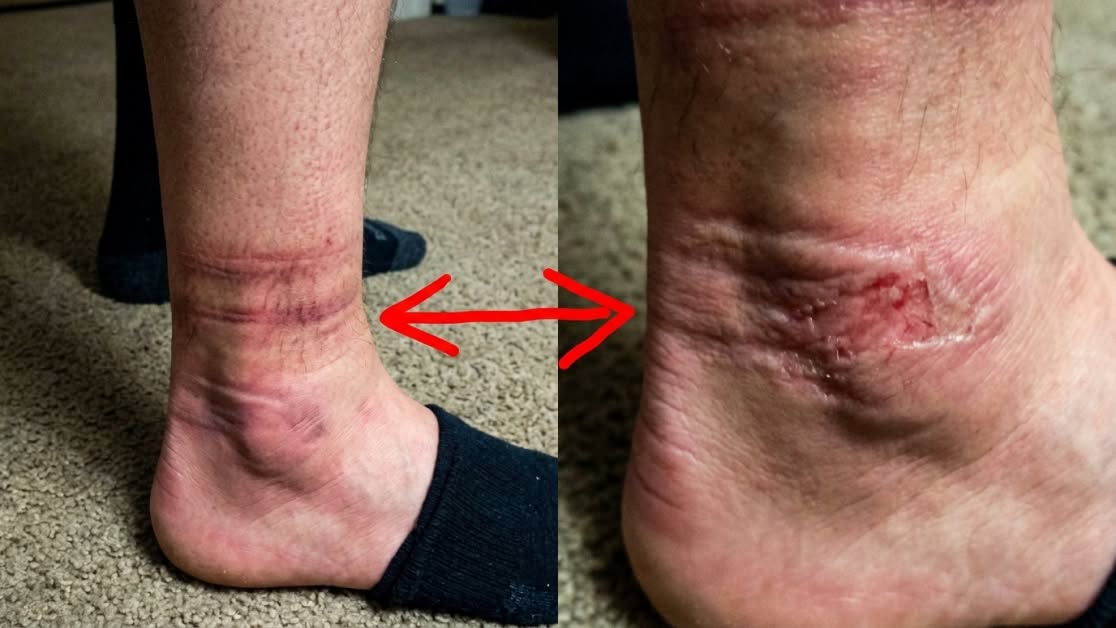
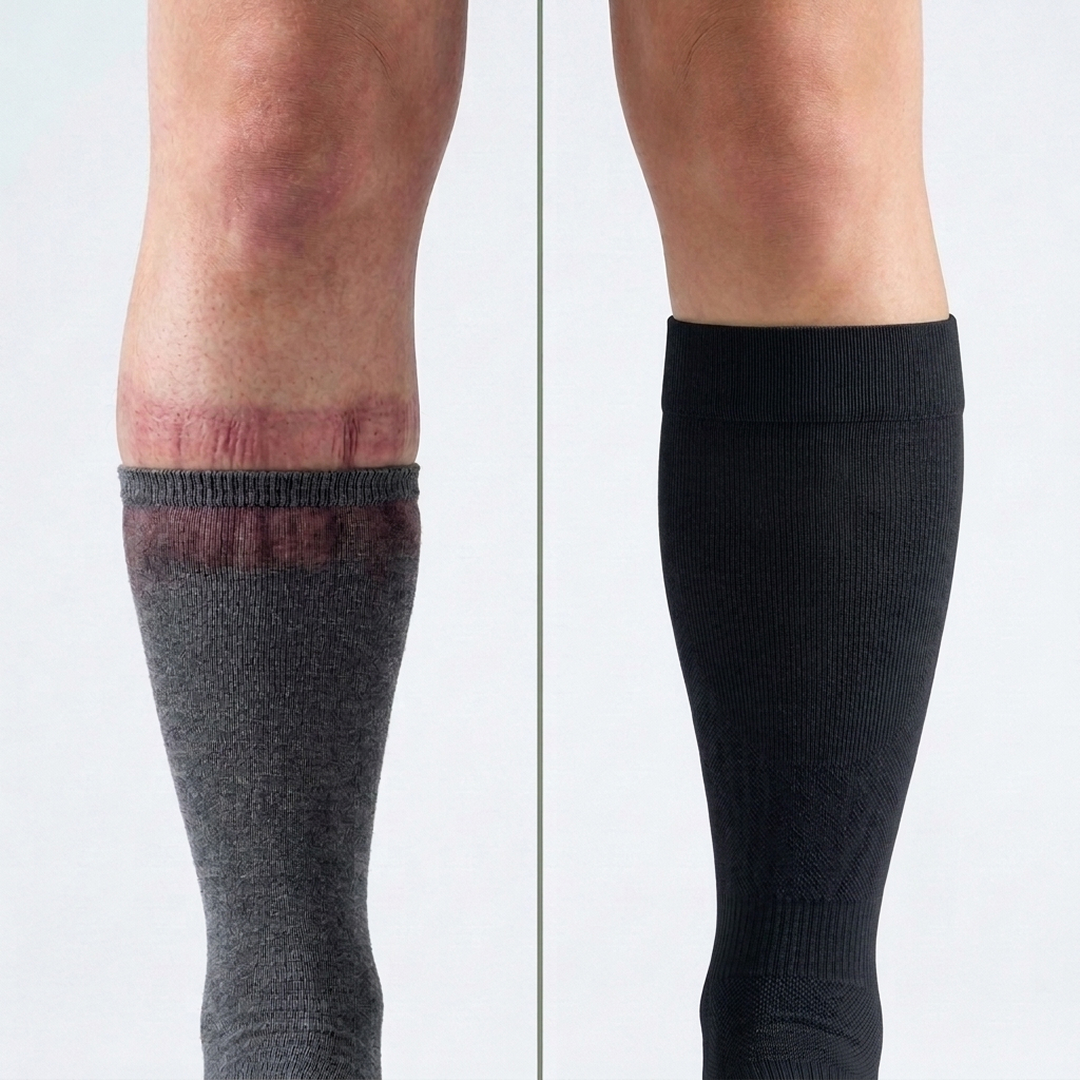
- Brown staining, eczema or hardening of the skin around the ankle
- An ulcer or a wound near the ankle that is not healing
- Peripheral arterial disease or diabetic neuropathy — compression may not be safe
If your veins are painful enough to limit what you do, a vascular assessment with a duplex ultrasound is worth having. Compression is the thing they will tell you to do first, but they can also tell you what is actually going on.
Daily wear routine
- Put them on before you get up properly. First thing in the morning, before your legs have spent an hour filling. This is the single biggest factor in whether compression helps.
- Wear them every upright day. Consistency beats intensity. Daily 20–30 mmHg does far more than occasional 30–40 mmHg.
- Smooth the knit flat over the vein. No wrinkles and no rolled band. A fold creates a pressure point exactly where you don't want one.
- Walk, and use your calves. The calf pump is what empties those veins. Compression makes each contraction more effective.
- Elevate in the evening. Ten to fifteen minutes with legs above heart height reduces the pressure your valves have to hold back.
- Replace pairs every 3–6 months of daily wear. Elastane fatigues. A sock that feels easy to put on is no longer delivering its rated pressure.
Putting firm socks on over a tender leg takes technique — the heel-pocket method in this guide makes it far easier. And keep them out of the tumble dryer: heat destroys the gradient.
Spider veins are a different thing
Spider veins (telangiectasia) are the fine red or purple threads just under the skin. They are tiny surface vessels rather than stretched deeper veins, and they are usually a cosmetic issue rather than a symptomatic one — though they often appear alongside venous insufficiency. Compression may reduce accompanying aching and may slow new ones appearing, but it will not fade the ones you already have. Sclerotherapy and laser are the treatments that do.
If veins run in your family
Family history is the strongest single predictor. If your parents have varicose veins and you have a standing job, wearing 20–30 mmHg on working days is one of the few genuinely preventative things you can do. Combine it with:
- Walking breaks — small and frequent beats one long walk
- Heel raises whenever you are stuck standing in one place
- Elevating your legs for 10–15 minutes in the evening
- Keeping weight in a healthy range to reduce abdominal and venous pressure
- Avoiding long, hot baths and saunas when symptoms are flaring
Bundles and the guarantee
Consistency is the entire mechanism, so buy enough pairs that a clean one is always available. Six pairs is what daily wearers order. Everything is priced in USD, ships free worldwide, and comes with 30 days to change your mind — worn pairs included.
2 pairs
Try them out — still covered by the 30-day guarantee
$24.50/pair
$49.00 total $104.96
You save $55.96 (53% off)
Choose 2 pairs4 pairs
Enough to rotate through the work week
$22.49/pair
$89.96 total $209.92
You save $119.96 (57% off)
Choose 4 pairs6 pairs
Most chosen — a fresh pair for every day of the week
$19.98/pair
$119.88 total $314.88
You save $195.00 (62% off)
Choose 6 pairsAll prices in USD. A single pair at full price is $52.48 — every bundle includes free worldwide shipping and the 30-day money-back guarantee.
Choosing between S/M and L/XL comes down to your calf measurement, not your shoe size. Check the size guide before ordering.




%20--%3e%3csvg%20version='1.1'%20baseProfile='tiny'%20id='Layer_1'%20xmlns='http://www.w3.org/2000/svg'%20xmlns:xlink='http://www.w3.org/1999/xlink'%20x='0px'%20y='0px'%20viewBox='0%200%20512%20210.2'%20xml:space='preserve'%3e%3cpath%20id='XMLID_34_'%20d='M93.6,27.1C87.6,34.2,78,39.8,68.4,39c-1.2-9.6,3.5-19.8,9-26.1c6-7.3,16.5-12.5,25-12.9%20C103.4,10,99.5,19.8,93.6,27.1%20M102.3,40.9c-13.9-0.8-25.8,7.9-32.4,7.9c-6.7,0-16.8-7.5-27.8-7.3c-14.3,0.2-27.6,8.3-34.9,21.2%20c-15,25.8-3.9,64,10.6,85c7.1,10.4,15.6,21.8,26.8,21.4c10.6-0.4,14.8-6.9,27.6-6.9c12.9,0,16.6,6.9,27.8,6.7%20c11.6-0.2,18.9-10.4,26-20.8c8.1-11.8,11.4-23.3,11.6-23.9c-0.2-0.2-22.4-8.7-22.6-34.3c-0.2-21.4,17.5-31.6,18.3-32.2%20C123.3,42.9,107.7,41.3,102.3,40.9%20M182.6,11.9v155.9h24.2v-53.3h33.5c30.6,0,52.1-21,52.1-51.4c0-30.4-21.1-51.2-51.3-51.2H182.6z%20M206.8,32.3h27.9c21,0,33,11.2,33,30.9c0,19.7-12,31-33.1,31h-27.8V32.3z%20M336.6,169c15.2,0,29.3-7.7,35.7-19.9h0.5v18.7h22.4V90.2%20c0-22.5-18-37-45.7-37c-25.7,0-44.7,14.7-45.4,34.9h21.8c1.8-9.6,10.7-15.9,22.9-15.9c14.8,0,23.1,6.9,23.1,19.6v8.6l-30.2,1.8%20c-28.1,1.7-43.3,13.2-43.3,33.2C298.4,155.6,314.1,169,336.6,169z%20M343.1,150.5c-12.9,0-21.1-6.2-21.1-15.7c0-9.8,7.9-15.5,23-16.4%20l26.9-1.7v8.8C371.9,140.1,359.5,150.5,343.1,150.5z%20M425.1,210.2c23.6,0,34.7-9,44.4-36.3L512,54.7h-24.6l-28.5,92.1h-0.5%20l-28.5-92.1h-25.3l41,113.5l-2.2,6.9c-3.7,11.7-9.7,16.2-20.4,16.2c-1.9,0-5.6-0.2-7.1-0.4v18.7C417.3,210,423.3,210.2,425.1,210.2z%20'/%3e%3cg%3e%3c/g%3e%3cg%3e%3c/g%3e%3cg%3e%3c/g%3e%3cg%3e%3c/g%3e%3cg%3e%3c/g%3e%3cg%3e%3c/g%3e%3c/svg%3e)