What compression socks are
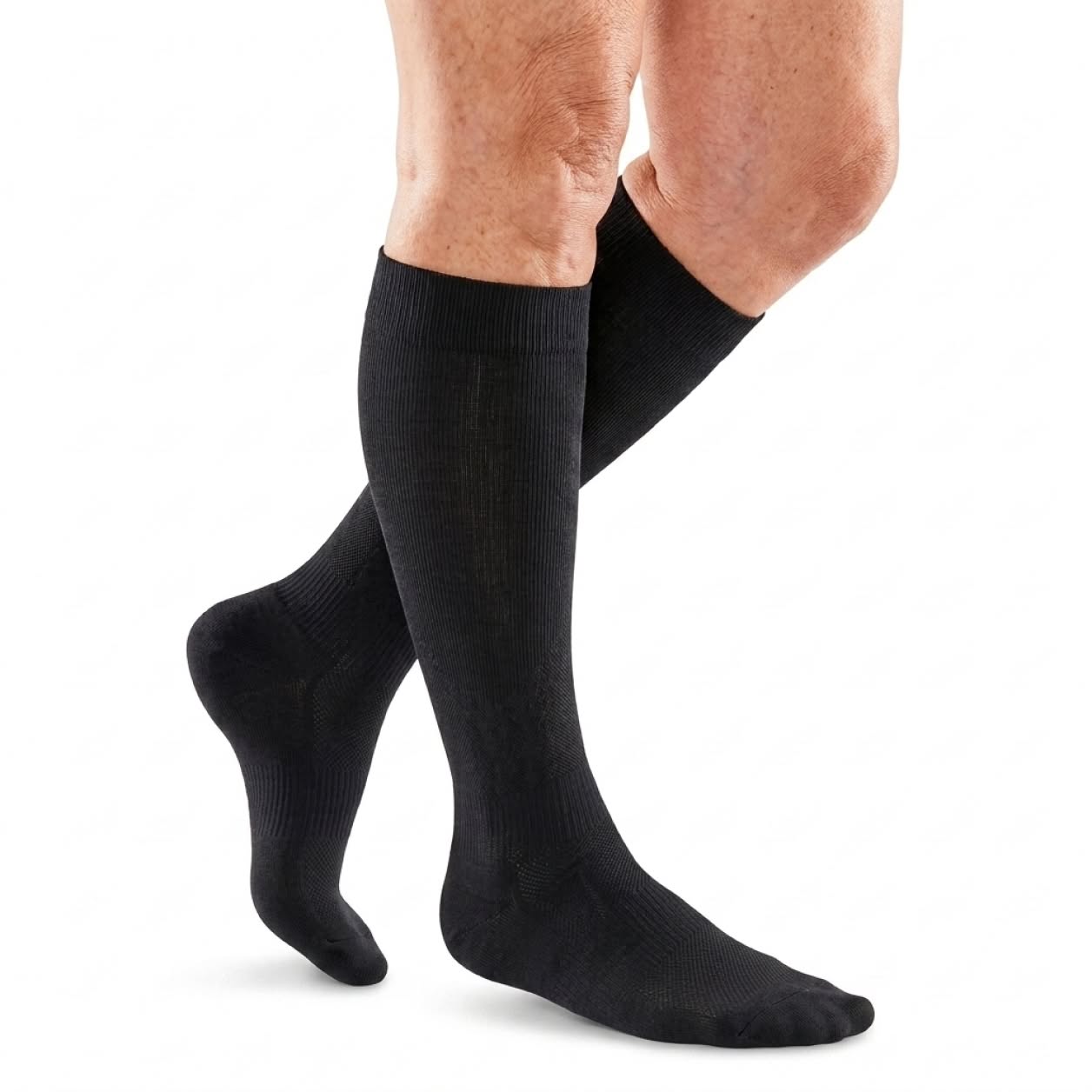
A compression sock is a knitted sock engineered to apply measured, controlled pressure to your lower leg. Pressure is quoted in mmHg — millimetres of mercury, the same unit as blood pressure. The number you see on the packet is the pressure at the ankle, which is where a properly built sock squeezes hardest.
The key word is graduated. An ordinary tight sock squeezes the same amount everywhere, which can actually trap fluid. A graduated sock creates a pressure gradient that gets progressively looser as it climbs, so the path of least resistance for blood and lymph runs upward, toward your heart.
How graduated compression actually works
Blood travels down to your feet easily — gravity does the work. Getting it back up is the hard part, and it relies on your calf muscles squeezing deep veins every time you move. Sit still at a desk, stand still behind a counter or sit strapped into a plane seat and that pump stops working. Fluid settles around the ankle, the leg feels heavy, and by mid-afternoon your shoes feel a size too small.
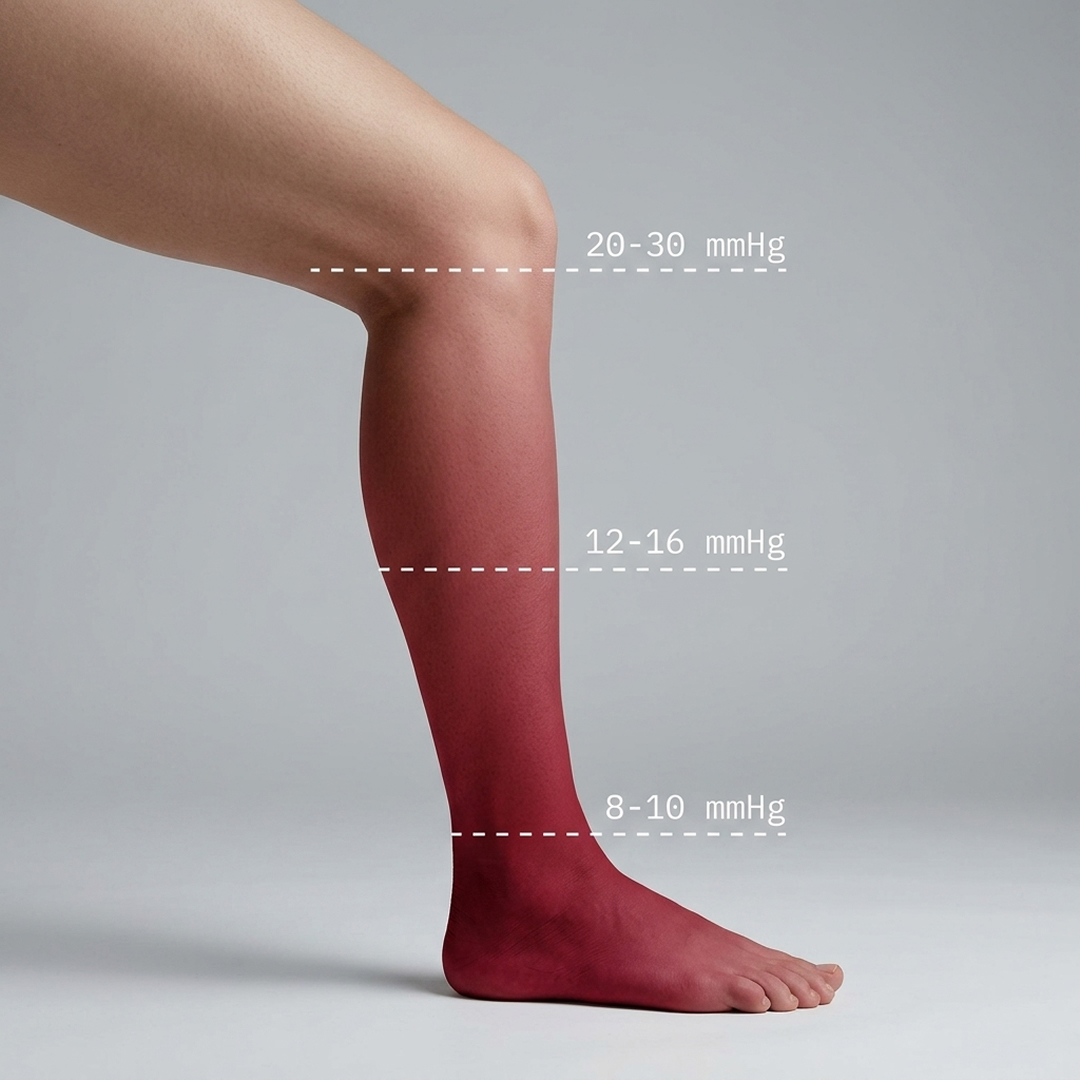
Graduated compression replaces some of that missing muscle action. TrueFit applies its firmest pressure at the ankle — roughly 20–30 mmHg — then eases to about 12–16 mmHg through the calf and 8–10 mmHg at the top. That descending gradient nudges blood and lymph upward instead of letting it pool. It also narrows the vein slightly, which helps one-way valves close properly and reduces backflow.
Read the longer explanation in how compression socks work.
What compression socks help with
- End-of-day swelling in the feet and ankles from sitting or standing still
- Heavy, aching, tired legs — the classic 3 p.m. concrete-legs feeling
- Travel swelling on long-haul flights, coach journeys and road trips
- Varicose and spider vein discomfort — compression manages the aching and heaviness, it does not remove existing veins
- Exercise recovery — less muscle oscillation during effort, less soreness afterwards
- Pregnancy-related leg swelling, which is one of the most common reasons women start wearing compression
What they are not: a treatment for deep vein thrombosis, a substitute for medical care, or a cure for underlying venous disease. They manage symptoms, and they do that well.
mmHg compression levels explained
Picking the level is the single decision that matters most. Too light and you feel nothing; too firm without a reason and you will not wear them.
| Level | Feel | Typical use |
|---|---|---|
| 8–15 mmHg | Barely noticeable | Mild tiredness, everyday desk wear, first-timers who dislike tight clothing |
| 15–20 mmHg | Light but present | Travel, pregnancy, light swelling, general prevention |
| 20–30 mmHg | Firm and supportive | Long shifts on your feet, persistent ankle swelling, varicose vein discomfort, recovery — this is TrueFit |
| 30–40 mmHg | Strong, medical | Prescribed for advanced venous disease, lymphoedema, post-surgery |
For most people the honest answer is 20–30 mmHg: strong enough to change how your legs feel by the evening, gentle enough to wear all day without a fight. The full breakdown is in mmHg compression levels explained.
The wide comfort strap is the difference
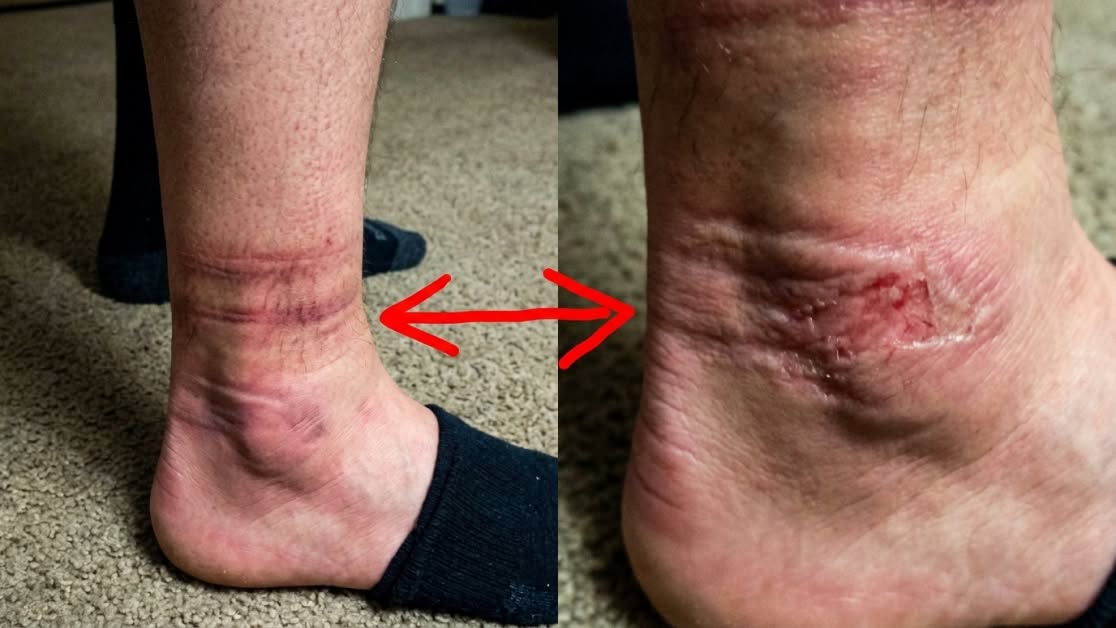
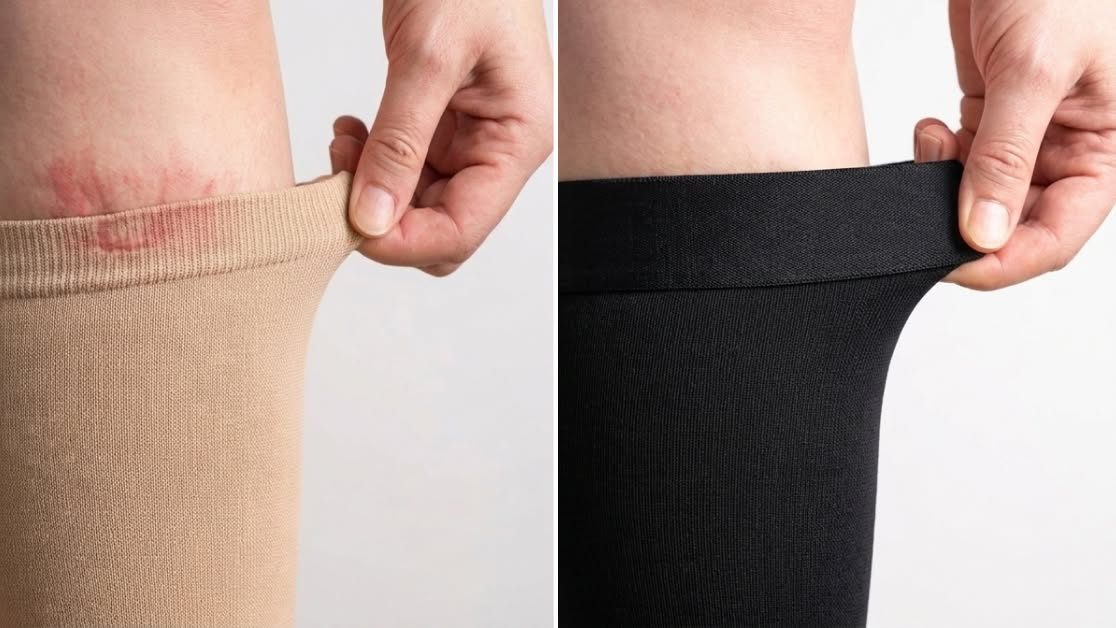
Almost every complaint about compression socks is the same: the narrow elastic band at the top cuts in, leaves a red ring, and by lunchtime feels like a tourniquet. It happens because a thin band has to generate all of its holding force across a couple of centimetres of skin.
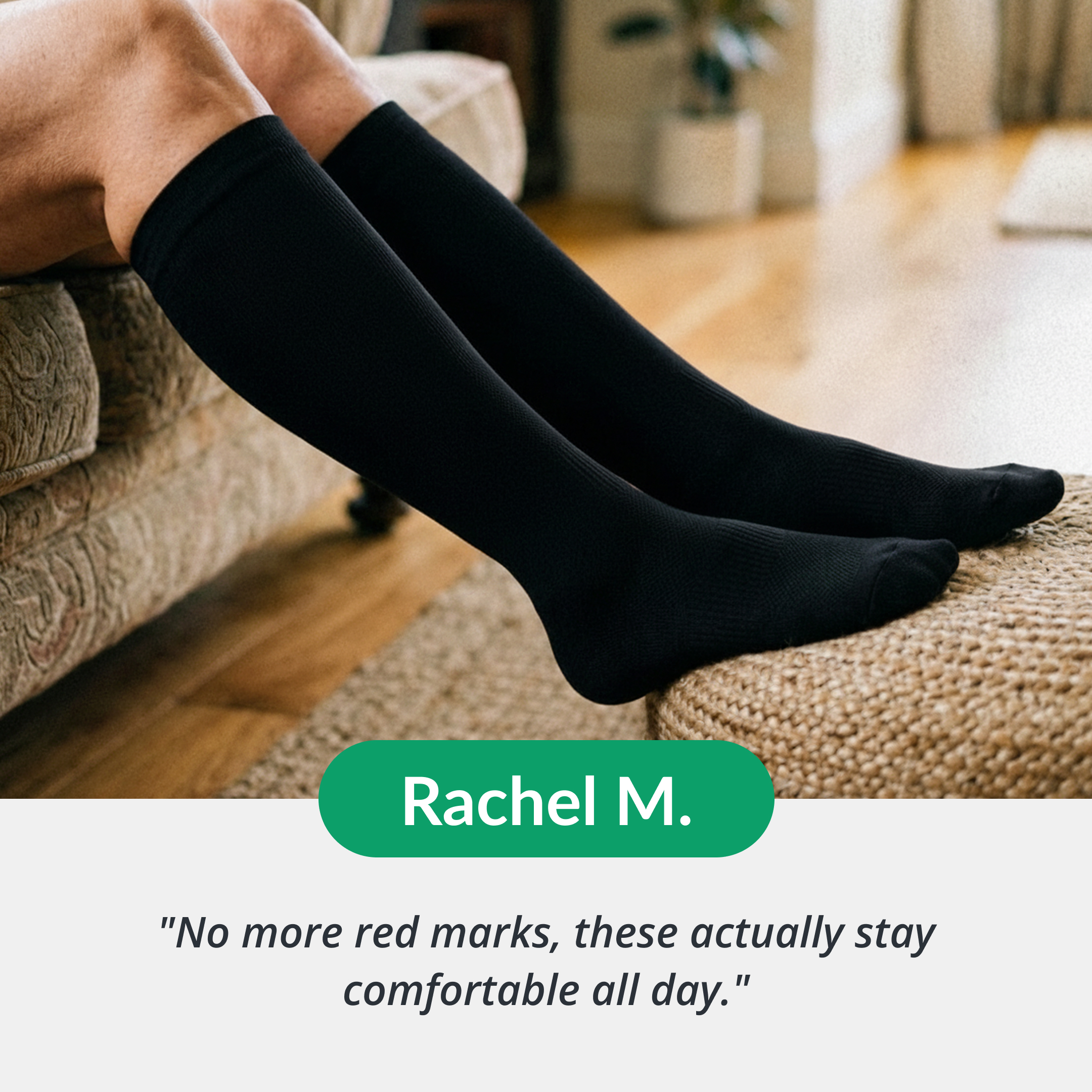
TrueFit finishes in a wide comfort strap instead. Spreading the same holding force across a broader area means the sock stays up all day without denting your calf — which is why the most common review we get is not about swelling at all, it is "no more red marks".
How to choose the right compression socks
- Level first. 15–20 mmHg for prevention and travel, 20–30 mmHg for symptoms you actually feel, 30–40 mmHg only on a clinician's instruction.
- Size by shoe size and calf width. Calf circumference matters more than shoe size — measure at the widest point in the morning. See the size guide.
- Length. Knee-high covers almost every everyday need. Thigh-high and waist-high are for specific clinical situations.
- Material. Look for a breathable blend with real elastane content. Bamboo-derived viscose handles moisture and odour far better than plain nylon.
- The top band. The detail nobody checks and everyone regrets. A wide, flat strap is what keeps a sock wearable past lunchtime.
How to put compression socks on
Firm socks put up a fight the first time. This method turns it into a ten-second job.
- Start dry and early. Put them on first thing in the morning, on dry skin, before swelling has built up. Damp legs and compression fabric fight each other.
- Turn the sock inside out to the heel. Reach inside the sock, pinch the heel and pull the leg section back so only the foot part is left the right way round.
- Seat the heel pocket. Slide your foot in and line the heel pocket up with your heel before pulling anything up the leg. A misplaced heel is what makes the rest feel wrong.
- Roll, don't yank. Roll the leg section up over your calf in stages, smoothing as you go. Never pull from the top strap alone.
- Smooth out wrinkles. Flatten any folds behind the knee and at the ankle. A wrinkle concentrates pressure in one line and is the usual cause of a pinch.
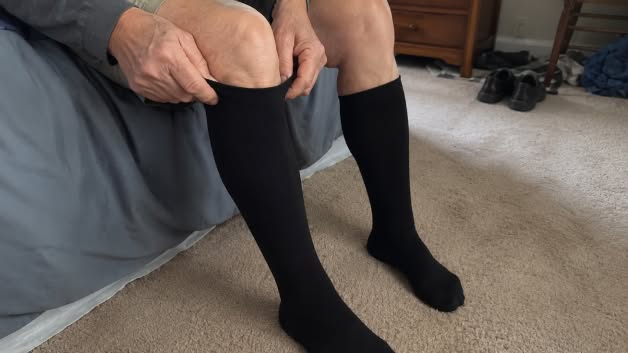
Struggling with limited reach or mobility? Our full putting-on guide covers donning aids and seated techniques.
How long to wear them each day
Put them on in the morning and take them off at bedtime. If you have never worn compression, start with 4–6 hours for the first two days, then build to a full day. Long flights: put them on before you leave home and keep them on until you land. Work shifts: on before the shift, off after you finish. Do not sleep in them unless a clinician tells you to — lying flat removes the gravity problem they are solving. More on wear times.
Washing and care
Machine wash cold on a gentle cycle and hang to dry. Skip fabric softener and the tumble dryer — heat is what destroys elastane, and once compression fades the sock looks fine but does nothing. Washed properly, a pair holds its compression for roughly six months of regular wear. That is exactly why compression socks are sold in multi-pair bundles: you need a clean pair every single day.
Who should not wear compression socks
Compression is safe for most people, but not everyone. Check with your doctor before wearing any compression garment if you have:
- Peripheral arterial disease or a known reduced arterial blood supply
- Diabetes with neuropathy, or any loss of sensation in the feet
- Skin infections, weeping dermatitis or open ulcers on the leg
- Untreated congestive heart failure
- A known allergy to elastane or synthetic knit fibres
Stop wearing them and seek advice if you get numbness, tingling, increasing pain, or colour change in your toes. This page is general information about the product, not medical advice. If you are diabetic, read compression socks for diabetics first.
Socks vs sleeves vs stockings
| Type | Covers | Best for |
|---|---|---|
| Compression socks | Foot and calf, knee-high | Everyday swelling, work shifts, travel, aching legs |
| Compression sleeves | Calf only, foot left bare | Running and shin support — no help for foot or ankle swelling |
| Compression stockings | Thigh-high or waist-high | Prescribed higher-grade venous conditions and post-surgical use |
Who wears TrueFit
- Nurses and shift workers on twelve-hour rotations
- Anyone standing on hard floors all day — retail, hospitality, teaching, trades
- Frequent flyers and long-haul travellers
- People with swollen feet and ankles at the end of the day
- People managing varicose or spider veins
- Runners and gym-goers recovering between sessions
- Men and women — the same unisex knit, sized in both shoe scales
Specifications
| Compression | Graduated, 20–30 mmHg at the ankle |
|---|---|
| Length | Knee-high |
| Sizes | S/M (women 5–9.5, men 4–8.5) and L/XL (women 10–13, men 9–13) — see the size guide |
| Material | Bamboo-derived viscose, nylon and spandex blend |
| Care | Machine wash cold, hang dry, no fabric softener |
| Shipping | Free worldwide, 3–7 business days to US/UK/CA/AU/NZ |
| Guarantee | 30 days, money back, keep the worn pairs |
Prices and bundles
TrueFit is sold in multi-pair bundles because compression socks need washing daily and one pair is never enough. All prices are in USD and shipping is free everywhere we deliver.
2 pairs
Try them out — still covered by the 30-day guarantee
$24.50/pair
$49.00 total $104.96
You save $55.96 (53% off)
Choose 2 pairs4 pairs
Enough to rotate through the work week
$22.49/pair
$89.96 total $209.92
You save $119.96 (57% off)
Choose 4 pairs6 pairs
Most chosen — a fresh pair for every day of the week
$19.98/pair
$119.88 total $314.88
You save $195.00 (62% off)
Choose 6 pairsAll prices in USD. A single pair at full price is $52.48 — every bundle includes free worldwide shipping and the 30-day money-back guarantee.




%20--%3e%3csvg%20version='1.1'%20baseProfile='tiny'%20id='Layer_1'%20xmlns='http://www.w3.org/2000/svg'%20xmlns:xlink='http://www.w3.org/1999/xlink'%20x='0px'%20y='0px'%20viewBox='0%200%20512%20210.2'%20xml:space='preserve'%3e%3cpath%20id='XMLID_34_'%20d='M93.6,27.1C87.6,34.2,78,39.8,68.4,39c-1.2-9.6,3.5-19.8,9-26.1c6-7.3,16.5-12.5,25-12.9%20C103.4,10,99.5,19.8,93.6,27.1%20M102.3,40.9c-13.9-0.8-25.8,7.9-32.4,7.9c-6.7,0-16.8-7.5-27.8-7.3c-14.3,0.2-27.6,8.3-34.9,21.2%20c-15,25.8-3.9,64,10.6,85c7.1,10.4,15.6,21.8,26.8,21.4c10.6-0.4,14.8-6.9,27.6-6.9c12.9,0,16.6,6.9,27.8,6.7%20c11.6-0.2,18.9-10.4,26-20.8c8.1-11.8,11.4-23.3,11.6-23.9c-0.2-0.2-22.4-8.7-22.6-34.3c-0.2-21.4,17.5-31.6,18.3-32.2%20C123.3,42.9,107.7,41.3,102.3,40.9%20M182.6,11.9v155.9h24.2v-53.3h33.5c30.6,0,52.1-21,52.1-51.4c0-30.4-21.1-51.2-51.3-51.2H182.6z%20M206.8,32.3h27.9c21,0,33,11.2,33,30.9c0,19.7-12,31-33.1,31h-27.8V32.3z%20M336.6,169c15.2,0,29.3-7.7,35.7-19.9h0.5v18.7h22.4V90.2%20c0-22.5-18-37-45.7-37c-25.7,0-44.7,14.7-45.4,34.9h21.8c1.8-9.6,10.7-15.9,22.9-15.9c14.8,0,23.1,6.9,23.1,19.6v8.6l-30.2,1.8%20c-28.1,1.7-43.3,13.2-43.3,33.2C298.4,155.6,314.1,169,336.6,169z%20M343.1,150.5c-12.9,0-21.1-6.2-21.1-15.7c0-9.8,7.9-15.5,23-16.4%20l26.9-1.7v8.8C371.9,140.1,359.5,150.5,343.1,150.5z%20M425.1,210.2c23.6,0,34.7-9,44.4-36.3L512,54.7h-24.6l-28.5,92.1h-0.5%20l-28.5-92.1h-25.3l41,113.5l-2.2,6.9c-3.7,11.7-9.7,16.2-20.4,16.2c-1.9,0-5.6-0.2-7.1-0.4v18.7C417.3,210,423.3,210.2,425.1,210.2z%20'/%3e%3cg%3e%3c/g%3e%3cg%3e%3c/g%3e%3cg%3e%3c/g%3e%3cg%3e%3c/g%3e%3cg%3e%3c/g%3e%3cg%3e%3c/g%3e%3c/svg%3e)