Read this before anything else
We would rather lose a sale than contribute to a foot injury. TrueFit socks are 20–30 mmHg graduated compression. That is a meaningful amount of pressure, and in diabetes the safety question is not "how do they feel" — it is whether your arteries can supply blood against that pressure, and whether your nerves can tell you if something is going wrong.
Two complications change the answer completely. Peripheral arterial disease reduces blood flow into the foot; adding external pressure on top of poor arterial supply can worsen tissue perfusion. Peripheral neuropathy removes sensation, so the pain that would normally make you take a too-tight sock off never arrives. Many people with long-standing diabetes have some degree of one or both, sometimes without knowing.
A clinician can assess this quickly — usually by checking foot pulses and often with an ankle-brachial pressure index measurement. Ask before you buy compression from us or from anyone else.
Diabetic socks vs compression socks
| Diabetic socks | Graduated compression socks | |
|---|---|---|
| Purpose | Protect an at-risk foot | Move blood upward out of the lower leg |
| Pressure | Deliberately minimal, non-binding top | Firmest at the ankle, easing to the calf |
| Seams | Seamless toe to avoid rub points | Flat-knit toe, reinforced heel and toe |
| Who it suits | Neuropathy, poor circulation, wound risk | Venous pooling, swelling, standing work, travel |
| TrueFit is… | Not a diabetic sock | This one — 20–30 mmHg graduated |
When compression may be appropriate
With good arterial supply and intact sensation, people with diabetes wear graduated compression for the same reasons everyone else does, and often with clinical encouragement:
- Venous swelling from long standing or seated days
- Symptomatic varicose veins and chronic venous insufficiency
- Travel-related swelling on long flights and drives
- Post-thrombotic management, where prescribed
In those situations compression is treating a venous problem that happens to occur in someone who also has diabetes. That is a different question from "are compression socks good for diabetes", which they are not — diabetes itself is not the indication.
When it is not appropriate
- Peripheral arterial disease or absent/weak foot pulses
- Significant peripheral neuropathy — you cannot feel a problem developing
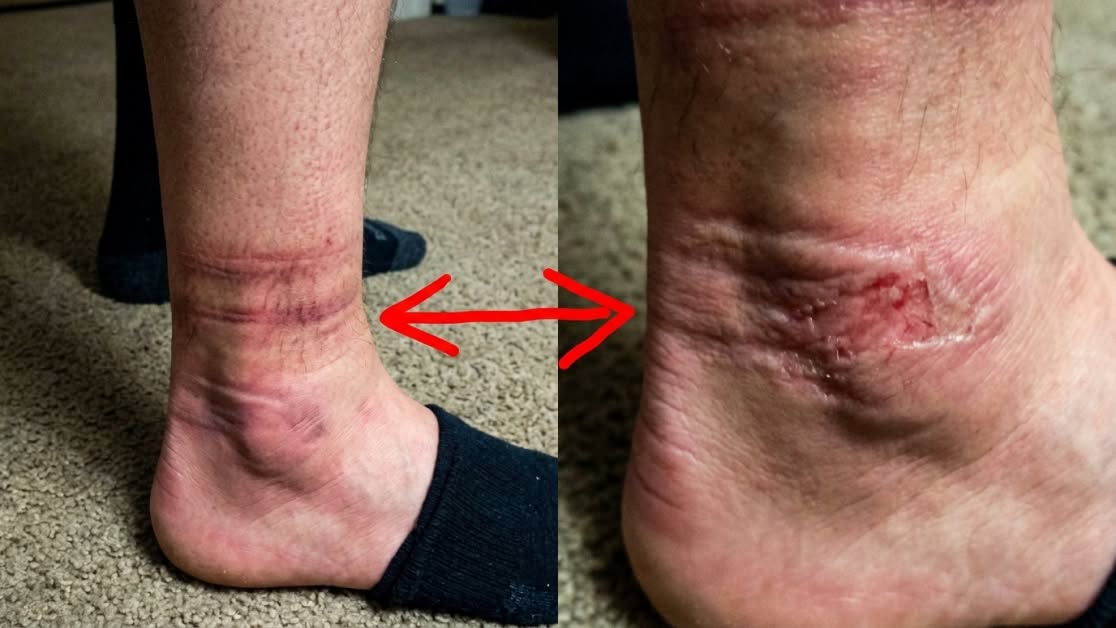
- Any open wound, ulcer, blister or infection on the foot or lower leg
- Recent foot surgery or Charcot foot
- Uncontrolled heart failure — shifting fluid centrally can be a problem
- Fragile or very dry, cracked skin where a firm knit could break it
What to ask your doctor or podiatrist
- Are my foot pulses normal, and do I need an ankle-brachial pressure index check?
- Do I have any degree of peripheral neuropathy?
- Is 20–30 mmHg appropriate for me, or should I use a lighter level?
- How many hours a day should I wear them, and should I ever wear them at night?
- What specific signs should make me stop immediately?
- How often should you review my feet if I start wearing compression?
Write the answers down and follow them over anything you read online, including this page.
A cautious daily routine
- Get clearance first. Ask your diabetes team or podiatrist whether 20–30 mmHg compression is appropriate for your circulation. This is not optional advice.
- Inspect your feet before putting socks on. Look at the soles, between the toes and around the heel. Use a mirror if you cannot see easily. Any new redness, blister or break in the skin means no compression until it is reviewed.
- Put them on smooth, with no wrinkles. A fold in the knit is a localised pressure point, and pressure points are how diabetic foot injuries start.
- Check again when you take them off. Look for marks that do not fade within about 20 minutes, colour changes or numbness. Those are stop signs.
- Never sleep in them unless told to. Overnight wear removes your ability to notice a problem for eight hours.
- Wash after every wear and replace when slack. A clean sock reduces infection risk; a stretched-out sock delivers unpredictable pressure.
Stop and get advice if you see any of the following: a mark that has not faded 20 minutes after removing the sock, new numbness or tingling, cold or pale toes, bluish colour, or any break in the skin. See side effects and safety for the full list of warning signs.
What matters in the sock itself
- A wide comfort strap, not a narrow band — narrow elastic is exactly the kind of concentrated pressure point to avoid.
- A soft, breathable, moisture-wicking knit — damp skin is more fragile and more infection-prone. TrueFit uses a bamboo-derived blend.
- A flat toe area — bulky toe seams cause rub injuries.
- Correct size — a sock that is too small stops being graduated and starts being a tourniquet. Measure your calf and use the size guide.
- Enough pairs to wear a clean one daily — hygiene is not a minor point here.
Bundles and guarantee
2 pairs
Try them out — still covered by the 30-day guarantee
$24.50/pair
$49.00 total $104.96
You save $55.96 (53% off)
Choose 2 pairs4 pairs
Enough to rotate through the work week
$22.49/pair
$89.96 total $209.92
You save $119.96 (57% off)
Choose 4 pairs6 pairs
Most chosen — a fresh pair for every day of the week
$19.98/pair
$119.88 total $314.88
You save $195.00 (62% off)
Choose 6 pairsAll prices in USD. A single pair at full price is $52.48 — every bundle includes free worldwide shipping and the 30-day money-back guarantee.
Every order includes free worldwide shipping and 30 days to return them for a full refund — including if your clinician reviews them and says no. Details on the returns page.
Medical disclaimer: this page is general information, not medical advice, and TrueFit socks are not a medical device. Decisions about compression when you have diabetes should be made with your diabetes team, podiatrist or GP.




%20--%3e%3csvg%20version='1.1'%20baseProfile='tiny'%20id='Layer_1'%20xmlns='http://www.w3.org/2000/svg'%20xmlns:xlink='http://www.w3.org/1999/xlink'%20x='0px'%20y='0px'%20viewBox='0%200%20512%20210.2'%20xml:space='preserve'%3e%3cpath%20id='XMLID_34_'%20d='M93.6,27.1C87.6,34.2,78,39.8,68.4,39c-1.2-9.6,3.5-19.8,9-26.1c6-7.3,16.5-12.5,25-12.9%20C103.4,10,99.5,19.8,93.6,27.1%20M102.3,40.9c-13.9-0.8-25.8,7.9-32.4,7.9c-6.7,0-16.8-7.5-27.8-7.3c-14.3,0.2-27.6,8.3-34.9,21.2%20c-15,25.8-3.9,64,10.6,85c7.1,10.4,15.6,21.8,26.8,21.4c10.6-0.4,14.8-6.9,27.6-6.9c12.9,0,16.6,6.9,27.8,6.7%20c11.6-0.2,18.9-10.4,26-20.8c8.1-11.8,11.4-23.3,11.6-23.9c-0.2-0.2-22.4-8.7-22.6-34.3c-0.2-21.4,17.5-31.6,18.3-32.2%20C123.3,42.9,107.7,41.3,102.3,40.9%20M182.6,11.9v155.9h24.2v-53.3h33.5c30.6,0,52.1-21,52.1-51.4c0-30.4-21.1-51.2-51.3-51.2H182.6z%20M206.8,32.3h27.9c21,0,33,11.2,33,30.9c0,19.7-12,31-33.1,31h-27.8V32.3z%20M336.6,169c15.2,0,29.3-7.7,35.7-19.9h0.5v18.7h22.4V90.2%20c0-22.5-18-37-45.7-37c-25.7,0-44.7,14.7-45.4,34.9h21.8c1.8-9.6,10.7-15.9,22.9-15.9c14.8,0,23.1,6.9,23.1,19.6v8.6l-30.2,1.8%20c-28.1,1.7-43.3,13.2-43.3,33.2C298.4,155.6,314.1,169,336.6,169z%20M343.1,150.5c-12.9,0-21.1-6.2-21.1-15.7c0-9.8,7.9-15.5,23-16.4%20l26.9-1.7v8.8C371.9,140.1,359.5,150.5,343.1,150.5z%20M425.1,210.2c23.6,0,34.7-9,44.4-36.3L512,54.7h-24.6l-28.5,92.1h-0.5%20l-28.5-92.1h-25.3l41,113.5l-2.2,6.9c-3.7,11.7-9.7,16.2-20.4,16.2c-1.9,0-5.6-0.2-7.1-0.4v18.7C417.3,210,423.3,210.2,425.1,210.2z%20'/%3e%3cg%3e%3c/g%3e%3cg%3e%3c/g%3e%3cg%3e%3c/g%3e%3cg%3e%3c/g%3e%3cg%3e%3c/g%3e%3cg%3e%3c/g%3e%3c/svg%3e)