Find my size in 30 seconds
Enter your shoe size, your calf measurement, or both. Calf width decides it when the two disagree.
Your result will appear here as soon as you enter a number.
The size chart
| Size | Women's shoe | Men's shoe | Calf (in) | Calf (cm) |
|---|---|---|---|---|
| S/M | US 5 – 9.5 | US 4 – 8.5 | Up to 16 in | Up to 40 cm |
| L/XL | US 10 – 13 | US 9 – 13 | 16 – 20 in | 40 – 50 cm |
Every pair is knitted at 20–30 mmHg graduated compression — the same pressure in both sizes. Size changes the circumference of the knit, not the strength of it. If you're still deciding whether 20–30 mmHg is right for you, read mmHg levels explained.
How to measure your calf properly
This takes a minute with a soft tape measure. If you don't have one, wrap a length of string around your calf, mark where it meets and lay it flat against a ruler.
- Measure in the morning. Take the measurement first thing, before standing or sitting has let any fluid settle in the lower leg. An evening calf can read up to half an inch larger.
- Stand with weight on both feet. Stand up straight with your weight even on both legs. Measuring while seated understates the calf because the muscle is relaxed.
- Find the widest point. The widest part of the calf usually sits about a third of the way up from the ankle. Run the tape up and down until you find the largest reading.
- Wrap the tape snugly. Keep a soft tape flat against the skin, snug but never pressing in. If the tape leaves a mark, it is too tight and the number will be too small.
- Compare against the chart. Up to 16 inches (40 cm) choose S/M. Between 16 and 20 inches (40–50 cm) choose L/XL. Calf width overrides shoe size whenever the two disagree.
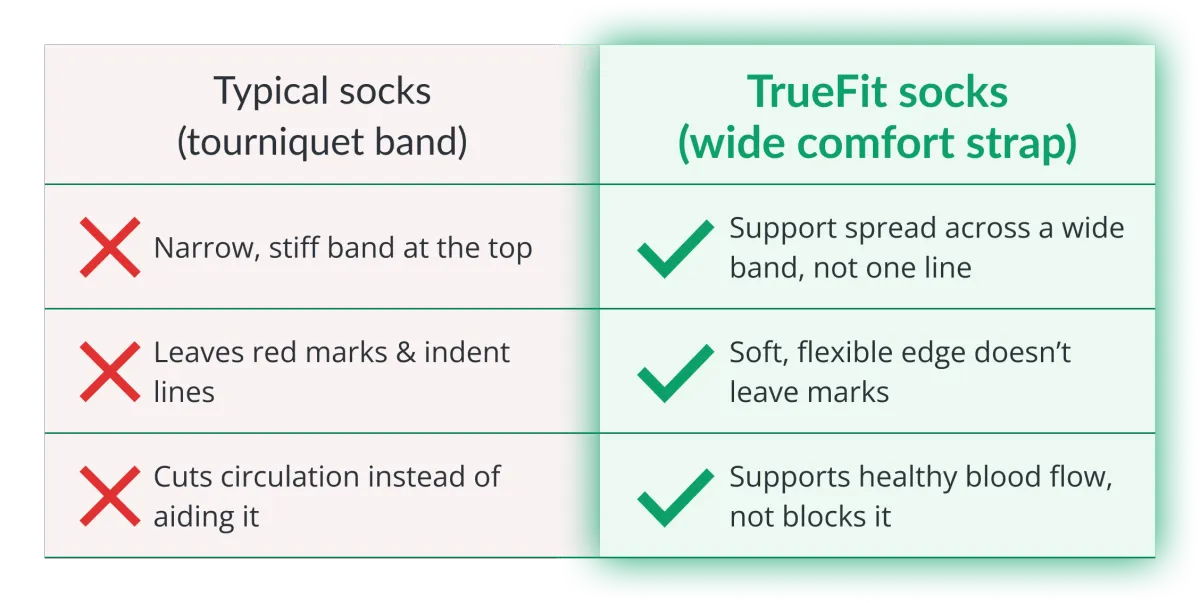
If that number is over 16 inches, order L/XL regardless of shoe size. A strap stretched past its comfortable range starts behaving like the narrow band we designed TrueFit to replace.
What to do if you're between sizes
Roughly one in six people land on the boundary — a shoe size that says S/M and a calf that says L/XL, or the reverse. The rule is simple and it never changes: follow the calf. The foot section of a compression sock has generous stretch and sits under almost no load. The calf section is the part doing the work, and it's the part that fails when it's overstretched.
- Calf 15.5–16 in (39–40 cm): S/M is correct, but if your legs swell noticeably through the day, take L/XL.
- Calf 16–17 in (40–43 cm) with small feet: L/XL. The foot will feel slightly roomy for the first wear and settle after a wash.
- Calf under 13 in (33 cm) with large feet: S/M if your shoe size allows; otherwise L/XL with the cuff sitting a little looser is still fine.
- Calf over 20 in (50 cm): TrueFit won't fit comfortably. Speak to a fitter about a made-to-measure garment rather than forcing a stock size.
International shoe size conversions
We ship worldwide and price everything in USD, so the chart below converts the common systems. Sizes are approximate between brands — the calf number is always the safer check.
| US women | US men | UK | EU | AU/NZ women | TrueFit size |
|---|---|---|---|---|---|
| 5 – 6.5 | 4 – 5.5 | 3 – 4.5 | 35 – 37 | 4 – 5.5 | S/M |
| 7 – 9.5 | 6 – 8.5 | 5 – 7 | 38 – 40 | 6 – 8.5 | S/M |
| 10 – 11.5 | 9 – 10.5 | 7.5 – 9 | 41 – 43 | 9 – 10.5 | L/XL |
| 12 – 13 | 11 – 13 | 9.5 – 10.5 | 44 – 45 | 11 – 12 | L/XL |
How the right size should feel on day one
Graduated compression feels different from a normal sock, and first-time wearers often assume "firm" means "too small". Here's the honest benchmark:
- Noticeably snug at the ankle, easing as it climbs the calf.
- The cuff sits flat below the knee without rolling, folding or sliding down.
- You're aware of the pressure for the first hour, then you forget about it.
- No numbness, tingling, colour change or pins and needles in the toes.
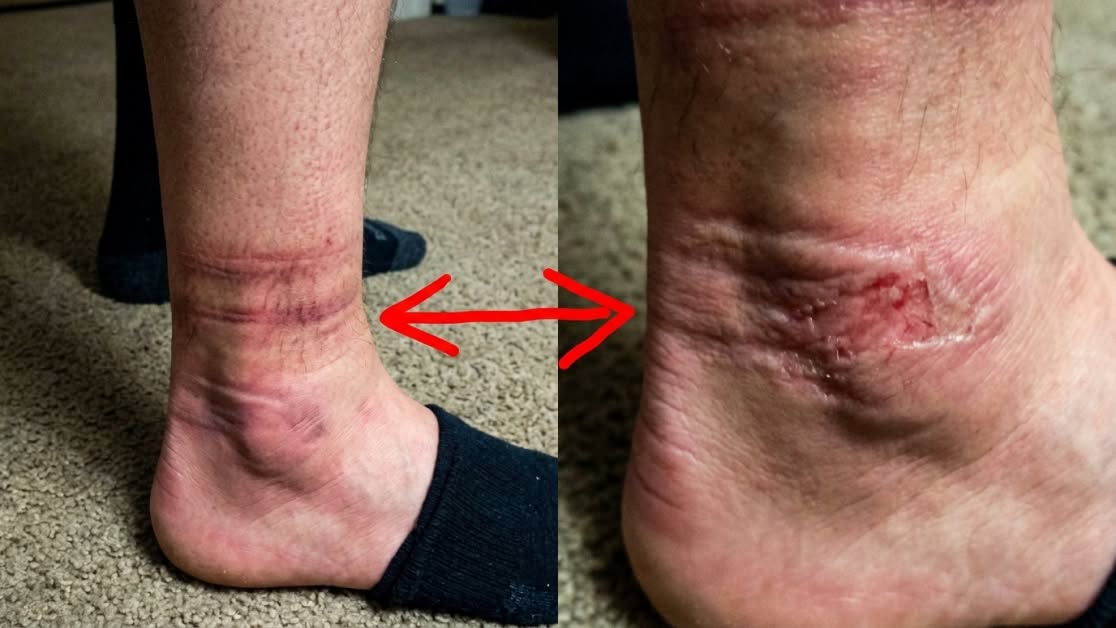
- Light indentation lines after removal are normal; deep welts are not.
Signs you've got the wrong size
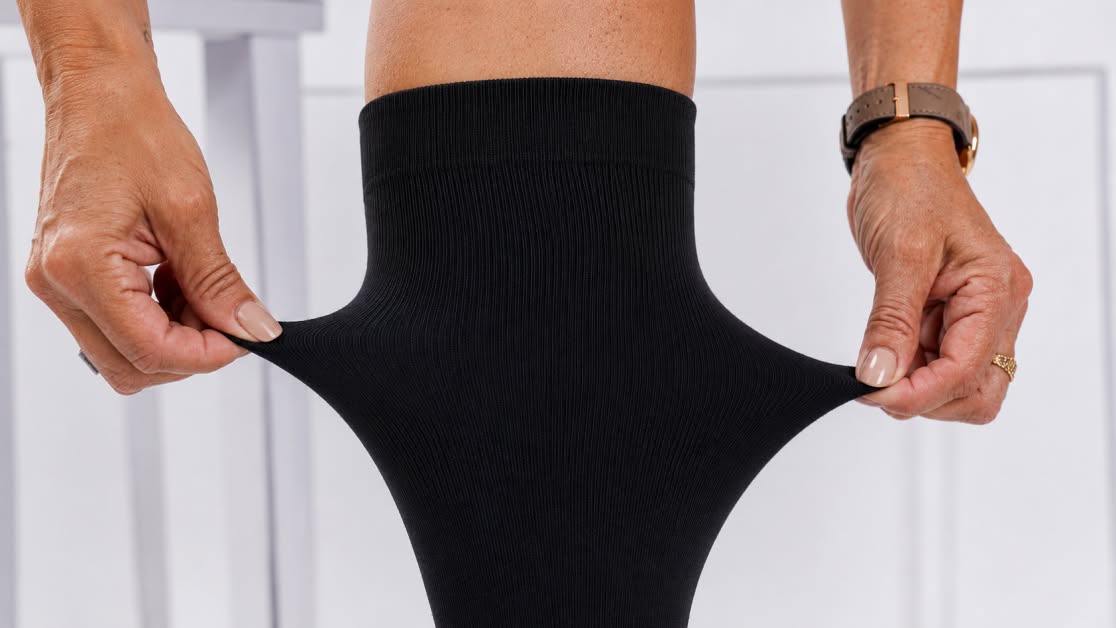
Too small: the cuff rolls or curls over, red welts remain more than 20 minutes after taking them off, toes go numb or cold, or you physically can't get the heel seated. Too large: the sock slides down through the day, the ankle feels loose, or the knit wrinkles at the ankle. A wrinkled or bunched sock concentrates pressure in one line and does the opposite of what compression is for — swap sizes rather than persevering.
Sizing when your legs swell
Ankle and calf swelling from long shifts, flights, pregnancy or hot weather can add an inch to your calf by evening. If your morning measurement is close to 16 inches and your legs swell visibly, order L/XL — a sock that fits perfectly at 8 a.m. and cuts in at 6 p.m. won't get worn. For the reverse case, where you're putting socks on specifically to control swelling, put them on before you get out of bed, when the leg is at its smallest. Our guides on how long to wear them and compression for swollen ankles go deeper.
Getting them on the first time
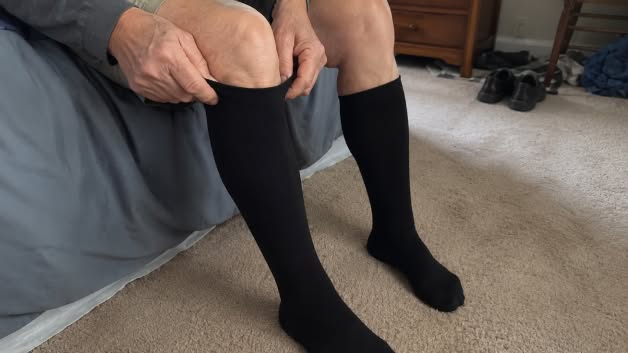
A 20–30 mmHg sock is meant to be firm, so don't try to yank it on like a gym sock. Turn the sock inside out down to the heel, slip your foot in, seat the heel properly, then roll the leg up. Never bunch the top over — a folded strap doubles its pressure. We walk through it step by step in our guide on how to put on compression socks without a fight.
Keeping your size: washing and care
Compression socks lose their fit through heat, not use. Wash cold on a gentle cycle (a mesh bag helps), skip fabric softener, and hang dry. Never tumble dry and never iron. Treated that way a pair keeps its measured compression for about six months of regular wear, which is why most people rotate three to six pairs rather than washing one pair nightly.
Pick your size, then your pack
Same size across every pack — bundles only change the price per pair. All prices in USD with free worldwide shipping.
2 pairs
Try them out — still covered by the 30-day guarantee
$24.50/pair
$49.00 total $104.96
You save $55.96 (53% off)
Choose 2 pairs4 pairs
Enough to rotate through the work week
$22.49/pair
$89.96 total $209.92
You save $119.96 (57% off)
Choose 4 pairs6 pairs
Most chosen — a fresh pair for every day of the week
$19.98/pair
$119.88 total $314.88
You save $195.00 (62% off)
Choose 6 pairsAll prices in USD. A single pair at full price is $52.48 — every bundle includes free worldwide shipping and the 30-day money-back guarantee.
Once you know your size, pick your bundle and check out — every order ships free worldwide with a 30-day money-back guarantee, and if the size isn't right we'll exchange it.




%20--%3e%3csvg%20version='1.1'%20baseProfile='tiny'%20id='Layer_1'%20xmlns='http://www.w3.org/2000/svg'%20xmlns:xlink='http://www.w3.org/1999/xlink'%20x='0px'%20y='0px'%20viewBox='0%200%20512%20210.2'%20xml:space='preserve'%3e%3cpath%20id='XMLID_34_'%20d='M93.6,27.1C87.6,34.2,78,39.8,68.4,39c-1.2-9.6,3.5-19.8,9-26.1c6-7.3,16.5-12.5,25-12.9%20C103.4,10,99.5,19.8,93.6,27.1%20M102.3,40.9c-13.9-0.8-25.8,7.9-32.4,7.9c-6.7,0-16.8-7.5-27.8-7.3c-14.3,0.2-27.6,8.3-34.9,21.2%20c-15,25.8-3.9,64,10.6,85c7.1,10.4,15.6,21.8,26.8,21.4c10.6-0.4,14.8-6.9,27.6-6.9c12.9,0,16.6,6.9,27.8,6.7%20c11.6-0.2,18.9-10.4,26-20.8c8.1-11.8,11.4-23.3,11.6-23.9c-0.2-0.2-22.4-8.7-22.6-34.3c-0.2-21.4,17.5-31.6,18.3-32.2%20C123.3,42.9,107.7,41.3,102.3,40.9%20M182.6,11.9v155.9h24.2v-53.3h33.5c30.6,0,52.1-21,52.1-51.4c0-30.4-21.1-51.2-51.3-51.2H182.6z%20M206.8,32.3h27.9c21,0,33,11.2,33,30.9c0,19.7-12,31-33.1,31h-27.8V32.3z%20M336.6,169c15.2,0,29.3-7.7,35.7-19.9h0.5v18.7h22.4V90.2%20c0-22.5-18-37-45.7-37c-25.7,0-44.7,14.7-45.4,34.9h21.8c1.8-9.6,10.7-15.9,22.9-15.9c14.8,0,23.1,6.9,23.1,19.6v8.6l-30.2,1.8%20c-28.1,1.7-43.3,13.2-43.3,33.2C298.4,155.6,314.1,169,336.6,169z%20M343.1,150.5c-12.9,0-21.1-6.2-21.1-15.7c0-9.8,7.9-15.5,23-16.4%20l26.9-1.7v8.8C371.9,140.1,359.5,150.5,343.1,150.5z%20M425.1,210.2c23.6,0,34.7-9,44.4-36.3L512,54.7h-24.6l-28.5,92.1h-0.5%20l-28.5-92.1h-25.3l41,113.5l-2.2,6.9c-3.7,11.7-9.7,16.2-20.4,16.2c-1.9,0-5.6-0.2-7.1-0.4v18.7C417.3,210,423.3,210.2,425.1,210.2z%20'/%3e%3cg%3e%3c/g%3e%3cg%3e%3c/g%3e%3cg%3e%3c/g%3e%3cg%3e%3c/g%3e%3cg%3e%3c/g%3e%3cg%3e%3c/g%3e%3c/svg%3e)