The one-line difference
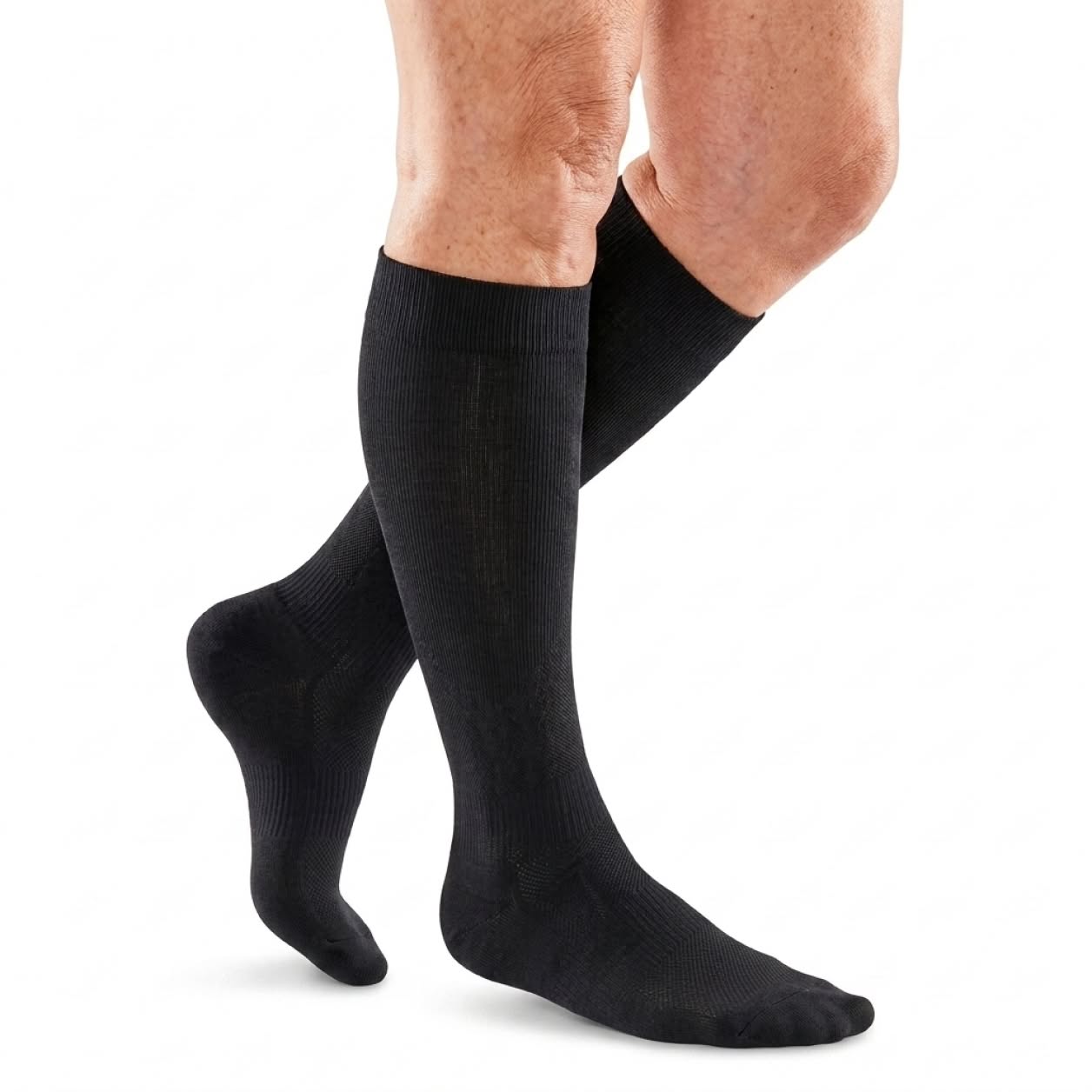
- Compression sock — foot + ankle + calf, knee-high, graduated from the ankle up. The default for swelling, aching legs, long shifts and flying.
- Compression sleeve — calf tube only, open at both ends, no foot. Built for athletic calf support, not for ankle swelling.
- Compression stocking — usually thigh-high or pantyhose, covering the whole leg. For vein involvement above the knee, often fitted or prescribed.
Side-by-side comparison
| Socks (knee-high) | Calf sleeves | Stockings (thigh-high) | |
|---|---|---|---|
| Covers the foot | Yes | No | Yes |
| Compresses the ankle | Yes — firmest point | No | Yes |
| True gradient | Yes, ankle → calf | Partial, calf only | Yes, ankle → thigh |
| Best for | Swelling, shifts, flights, daily wear | Running, calf support, recovery | Vein disease above the knee |
| Wear with your own socks | No need | Yes | No need |
| Typical strength | 15–20 or 20–30 mmHg | Often unrated | 20–30 / 30–40 mmHg |
Why the missing foot matters so much
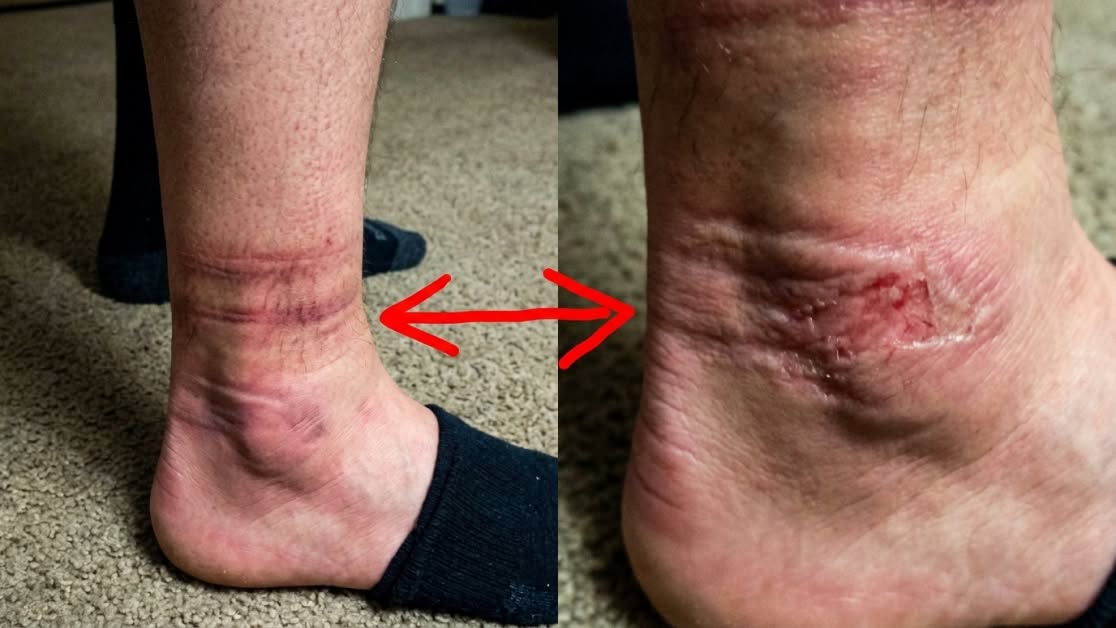
Fluid collects at the lowest point of the leg. That's the ankle and the top of the foot, which is exactly why graduated compression is designed to be firmest there and lighter as it climbs. A sleeve starts above the ankle, so the part of the leg that swells most is left uncompressed — and some wearers end up with a visible ring of puffiness right below the sleeve's lower edge. If your problem is "my ankles are fat by 5 p.m.", a sleeve doesn't address it. Our how compression works guide covers the physiology.
So when is a sleeve the right buy?
Sport. A runner may want calf support and reduced muscle oscillation while still wearing their preferred cushioned running sock, or may want to slip support on after a session for recovery. That's a legitimate use case and a sleeve is convenient for it. For anything swelling-related, see compression socks for running — even most runners are better served by a full sock during travel and recovery days.
Socks vs stockings
The words are used loosely, and a lot of search results treat them as synonyms. In practical terms:
- Knee-high handles the overwhelming majority of everyday complaints — swelling, heaviness, aching after standing, travel, pregnancy-related puffiness.
- Thigh-high or pantyhose exists for vein involvement above the knee and for post-procedure care. It's harder to fit, more likely to slip, and typically prescribed rather than chosen.
Unless a clinician told you to go higher, knee-high is the right starting point — and it's far more likely to actually be worn every day, which is what determines whether compression helps at all.
The other comparison: real compression vs 'compression-style'
A lot of athletic socks are marketed as compression without a published mmHg rating. Even pressure top to bottom creates no gradient, so there's no directional push. Worse, if the band at the top is the tightest part, it can trap blood below it. Two checks before you buy anything: does it state an mmHg range, and is that range at the ankle? mmHg levels explained shows what each range does.
Pick by problem
- Swollen feet or ankles → knee-high socks
- 12-hour shifts → knee-high socks
- Long-haul flights → knee-high socks
- Visible varicose veins below the knee → knee-high socks; above the knee, ask your clinician about stockings
- Race day and recovery → socks for running, sleeves optional
TrueFit pricing
2 pairs
Try them out — still covered by the 30-day guarantee
$24.50/pair
$49.00 total $104.96
You save $55.96 (53% off)
Choose 2 pairs4 pairs
Enough to rotate through the work week
$22.49/pair
$89.96 total $209.92
You save $119.96 (57% off)
Choose 4 pairs6 pairs
Most chosen — a fresh pair for every day of the week
$19.98/pair
$119.88 total $314.88
You save $195.00 (62% off)
Choose 6 pairsAll prices in USD. A single pair at full price is $52.48 — every bundle includes free worldwide shipping and the 30-day money-back guarantee.




%20--%3e%3csvg%20version='1.1'%20baseProfile='tiny'%20id='Layer_1'%20xmlns='http://www.w3.org/2000/svg'%20xmlns:xlink='http://www.w3.org/1999/xlink'%20x='0px'%20y='0px'%20viewBox='0%200%20512%20210.2'%20xml:space='preserve'%3e%3cpath%20id='XMLID_34_'%20d='M93.6,27.1C87.6,34.2,78,39.8,68.4,39c-1.2-9.6,3.5-19.8,9-26.1c6-7.3,16.5-12.5,25-12.9%20C103.4,10,99.5,19.8,93.6,27.1%20M102.3,40.9c-13.9-0.8-25.8,7.9-32.4,7.9c-6.7,0-16.8-7.5-27.8-7.3c-14.3,0.2-27.6,8.3-34.9,21.2%20c-15,25.8-3.9,64,10.6,85c7.1,10.4,15.6,21.8,26.8,21.4c10.6-0.4,14.8-6.9,27.6-6.9c12.9,0,16.6,6.9,27.8,6.7%20c11.6-0.2,18.9-10.4,26-20.8c8.1-11.8,11.4-23.3,11.6-23.9c-0.2-0.2-22.4-8.7-22.6-34.3c-0.2-21.4,17.5-31.6,18.3-32.2%20C123.3,42.9,107.7,41.3,102.3,40.9%20M182.6,11.9v155.9h24.2v-53.3h33.5c30.6,0,52.1-21,52.1-51.4c0-30.4-21.1-51.2-51.3-51.2H182.6z%20M206.8,32.3h27.9c21,0,33,11.2,33,30.9c0,19.7-12,31-33.1,31h-27.8V32.3z%20M336.6,169c15.2,0,29.3-7.7,35.7-19.9h0.5v18.7h22.4V90.2%20c0-22.5-18-37-45.7-37c-25.7,0-44.7,14.7-45.4,34.9h21.8c1.8-9.6,10.7-15.9,22.9-15.9c14.8,0,23.1,6.9,23.1,19.6v8.6l-30.2,1.8%20c-28.1,1.7-43.3,13.2-43.3,33.2C298.4,155.6,314.1,169,336.6,169z%20M343.1,150.5c-12.9,0-21.1-6.2-21.1-15.7c0-9.8,7.9-15.5,23-16.4%20l26.9-1.7v8.8C371.9,140.1,359.5,150.5,343.1,150.5z%20M425.1,210.2c23.6,0,34.7-9,44.4-36.3L512,54.7h-24.6l-28.5,92.1h-0.5%20l-28.5-92.1h-25.3l41,113.5l-2.2,6.9c-3.7,11.7-9.7,16.2-20.4,16.2c-1.9,0-5.6-0.2-7.1-0.4v18.7C417.3,210,423.3,210.2,425.1,210.2z%20'/%3e%3cg%3e%3c/g%3e%3cg%3e%3c/g%3e%3cg%3e%3c/g%3e%3cg%3e%3c/g%3e%3cg%3e%3c/g%3e%3cg%3e%3c/g%3e%3c/svg%3e)