What changes when you lie down
Graduated compression exists to solve one specific problem: blood and fluid pooling in the lower leg because gravity is pulling them down while you stand or sit. The moment you lie flat, your feet are roughly level with your heart and that pressure column disappears. Venous return happens easily on its own. That is why hospital advice for tired, swollen legs is almost always "elevate", not "add more compression".
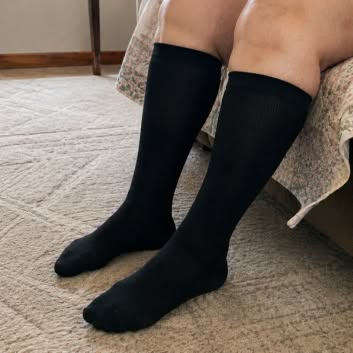
So overnight compression isn't harmful for most people — it's simply doing much less work than the same sock does during your day. If you can only wear compression for part of the 24 hours, the waking hours are worth far more. Our wear-time guide covers this in detail.
When overnight wear is genuinely recommended
- After certain surgeries, where anti-embolism stockings are prescribed for continuous wear while mobility is limited.
- During treatment or recovery from a clot, under medical direction.
- Lymphoedema management, often with specific night garments that are padded and lower-pressure rather than standard day socks.
- Severe venous insufficiency where a clinician has set a wear schedule for you.
In every one of those cases the instruction comes from a clinician who has looked at your arterial supply first. That is the difference between prescribed overnight compression and just leaving your socks on because you were tired.
The risks of wearing them 24/7
The problems are practical rather than dramatic, but they're real:
- You can't feel a fit problem while asleep. A cuff that rolls or a sock that bunches sits there for eight hours instead of eight seconds.
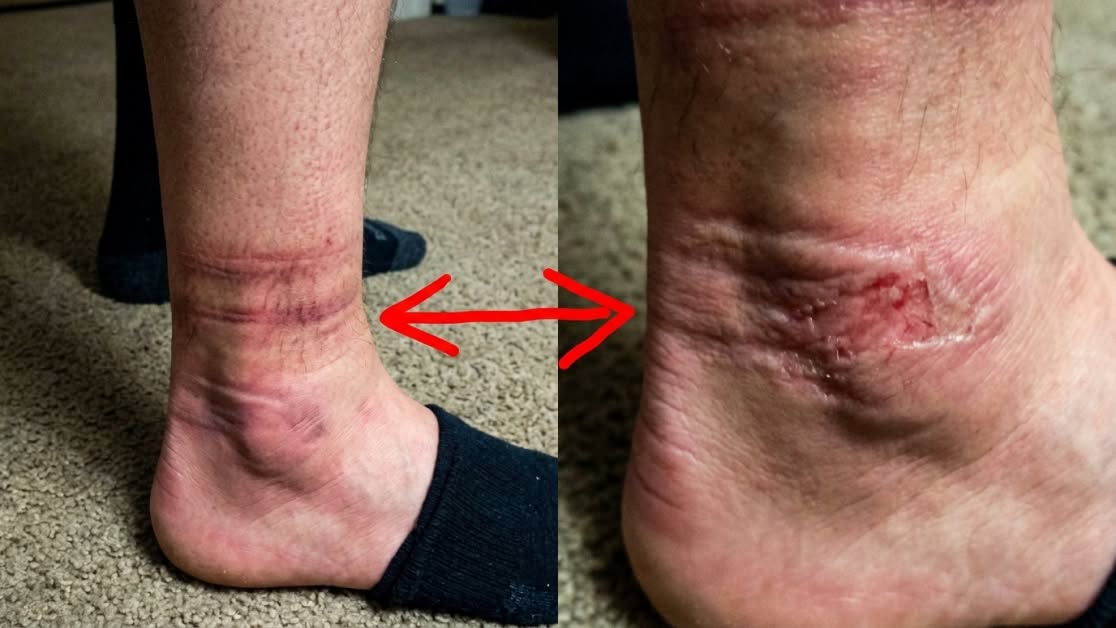
- Skin doesn't get a break. Continuous pressure with no airing raises the chance of dryness, irritation and — in fragile skin — breakdown.
- Hygiene. Socks worn 24 hours a day can't be washed daily, and compression fabric needs washing to recover its stretch.
- Higher risk if circulation is already compromised. With arterial disease or neuropathy, overnight wear without clearance is the wrong call. See side effects and contraindications.
A better evening routine for heavy legs
- Keep them on until you settle for the evening — the last two hours of standing are when swelling peaks.
- Take them off and elevate. Legs above heart level for 15–20 minutes, calves supported, not just feet on a low stool.
- Move your ankles. Twenty slow ankle pumps fire the calf pump manually.
- Moisturise at night, not in the morning. Skin has hours to absorb it, and the socks slide on dry the next day.
- Put the fresh pair on before you get out of bed. Your leg is at its smallest first thing — this is the single biggest improvement most people can make.
What about naps, flights and long car journeys?
Different situation entirely. Sleeping upright on a plane or in a car seat is exactly when compression matters most, because you're immobile and your legs are down. Keep them on for the whole journey and a couple of hours after landing — see compression socks for flying.
Night cramps and restless legs
Plenty of TrueFit wearers say cramps and restlessness dropped once they started wearing compression. The likely reason is that they arrive at bedtime with less pooled fluid and less muscle fatigue — a daytime effect showing up at night. Try a full day of wear before you try sleeping in them.
The bottom line
Unless someone with your medical history told you to, wear compression while you're upright and take it off to sleep. If you're wearing them all night because your legs still feel heavy in the morning, the fix is usually pressure level or fit, not more hours — check mmHg levels and the size guide.




%20--%3e%3csvg%20version='1.1'%20baseProfile='tiny'%20id='Layer_1'%20xmlns='http://www.w3.org/2000/svg'%20xmlns:xlink='http://www.w3.org/1999/xlink'%20x='0px'%20y='0px'%20viewBox='0%200%20512%20210.2'%20xml:space='preserve'%3e%3cpath%20id='XMLID_34_'%20d='M93.6,27.1C87.6,34.2,78,39.8,68.4,39c-1.2-9.6,3.5-19.8,9-26.1c6-7.3,16.5-12.5,25-12.9%20C103.4,10,99.5,19.8,93.6,27.1%20M102.3,40.9c-13.9-0.8-25.8,7.9-32.4,7.9c-6.7,0-16.8-7.5-27.8-7.3c-14.3,0.2-27.6,8.3-34.9,21.2%20c-15,25.8-3.9,64,10.6,85c7.1,10.4,15.6,21.8,26.8,21.4c10.6-0.4,14.8-6.9,27.6-6.9c12.9,0,16.6,6.9,27.8,6.7%20c11.6-0.2,18.9-10.4,26-20.8c8.1-11.8,11.4-23.3,11.6-23.9c-0.2-0.2-22.4-8.7-22.6-34.3c-0.2-21.4,17.5-31.6,18.3-32.2%20C123.3,42.9,107.7,41.3,102.3,40.9%20M182.6,11.9v155.9h24.2v-53.3h33.5c30.6,0,52.1-21,52.1-51.4c0-30.4-21.1-51.2-51.3-51.2H182.6z%20M206.8,32.3h27.9c21,0,33,11.2,33,30.9c0,19.7-12,31-33.1,31h-27.8V32.3z%20M336.6,169c15.2,0,29.3-7.7,35.7-19.9h0.5v18.7h22.4V90.2%20c0-22.5-18-37-45.7-37c-25.7,0-44.7,14.7-45.4,34.9h21.8c1.8-9.6,10.7-15.9,22.9-15.9c14.8,0,23.1,6.9,23.1,19.6v8.6l-30.2,1.8%20c-28.1,1.7-43.3,13.2-43.3,33.2C298.4,155.6,314.1,169,336.6,169z%20M343.1,150.5c-12.9,0-21.1-6.2-21.1-15.7c0-9.8,7.9-15.5,23-16.4%20l26.9-1.7v8.8C371.9,140.1,359.5,150.5,343.1,150.5z%20M425.1,210.2c23.6,0,34.7-9,44.4-36.3L512,54.7h-24.6l-28.5,92.1h-0.5%20l-28.5-92.1h-25.3l41,113.5l-2.2,6.9c-3.7,11.7-9.7,16.2-20.4,16.2c-1.9,0-5.6-0.2-7.1-0.4v18.7C417.3,210,423.3,210.2,425.1,210.2z%20'/%3e%3cg%3e%3c/g%3e%3cg%3e%3c/g%3e%3cg%3e%3c/g%3e%3cg%3e%3c/g%3e%3cg%3e%3c/g%3e%3cg%3e%3c/g%3e%3c/svg%3e)