Why pregnancy makes legs swell
Three things happen at once. Blood volume rises by up to half, so there is simply more fluid in circulation. Progesterone relaxes vein walls, which makes them wider and their valves less efficient. And as the uterus grows it presses on the pelvic veins that drain the legs, slowing return further. The result is fluid pooling in the lowest part of the body — feet and ankles by late afternoon, plus aching, heaviness and sometimes new varicose or spider veins.
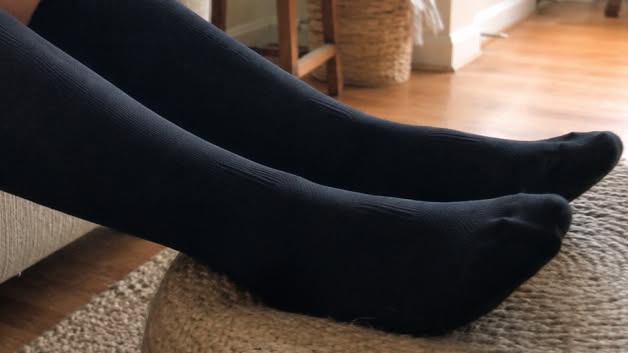
Graduated compression counters exactly that mechanism: firmest at the ankle, lighter up the calf, so blood has an easier path back up. Read how compression socks work for the detail.
What compression actually helps with
- Ankle and foot swelling that builds through the day
- Aching, heavy, tired legs after standing or walking
- Discomfort from varicose and spider veins, and slowing their progression
- Night cramps and restlessness, indirectly, by reducing daytime pooling
- Reducing clot risk on long journeys — pregnancy is a recognised clot risk factor and flying compounds it
What it does not do is treat the cause of medically significant swelling. See the warning list below.
When to start, and when to wear them
- Start when symptoms start — commonly early second trimester, but earlier is fine if you're on your feet all day or already have veins.
- Put them on before getting out of bed. This is the single most effective habit. Once you've been upright for an hour, the fluid is already there.
- Wear through the day, take them off in the evening, and elevate your legs for 15 minutes before bed.
- Don't sleep in them unless your clinician advised it — see can you sleep in compression socks.
Which compression level?
- 15–20 mmHg — mild swelling, prevention, first pregnancy pair, travel.
- 20–30 mmHg — noticeable daily swelling, visible varicose veins, long hours standing. This is the TrueFit ankle rating and the most-recommended everyday range.
- 30–40 mmHg — prescription territory; only on medical advice.
Full breakdown in mmHg levels explained.
Sizing when your body is changing
Size to your calf circumference at its widest point, measured in the morning — not to your shoe size and not to your pre-pregnancy measurements. Many women move up a size in the third trimester, and a sock that fits at 8 a.m. but bites by 6 p.m. is a size too small. If you're between sizes with swelling, go up. The size guide has an instant size finder and international conversions.
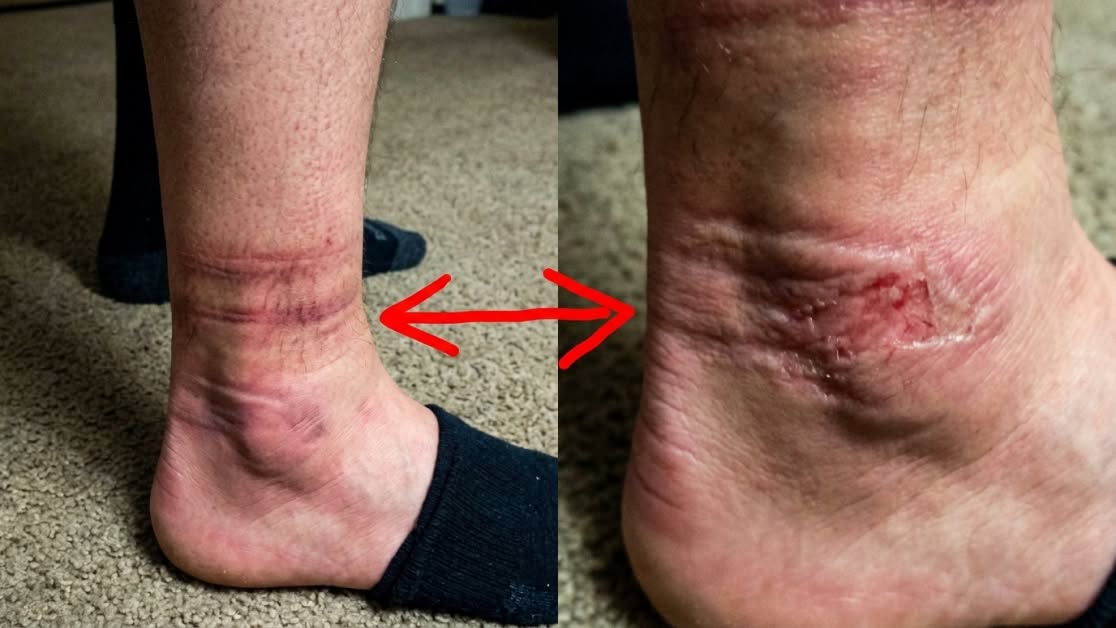
Knee-high is right for almost everyone. Avoid anything that stops mid-thigh with a tight band, and never fold or roll the top of a knee-high down — that turns a spread hold into a tourniquet.
Getting them on with a bump
Reaching your feet in the third trimester is the practical obstacle. Three things that work: sit on the edge of the bed rather than bending forward from standing; turn the sock inside out to the heel and work it up in stages (the heel-pocket method); or use rubber washing-up gloves for grip so you can pull with the flats of your hands instead of your fingertips. Asking your partner is not cheating.
When swelling is not just swelling — get seen
Contact your midwife, doctor or maternity unit urgently if you have:
- Sudden swelling of the face, hands or feet
- Swelling with a headache, vision changes or upper abdominal pain (pre-eclampsia signs)
- Swelling in one leg only, especially with pain, heat or redness (possible clot)
- Chest pain or breathlessness
This page is general education and not medical advice. Compression socks are widely used in pregnancy, but your midwife or doctor knows your history — ask them before starting if you have any circulatory condition.
How many pairs?
Compression works when it's worn daily, and it needs washing after every wear, so a single pair is awkward in practice. Most pregnant wearers keep two to four so there's always a dry pair by the bed.
2 pairs
Try them out — still covered by the 30-day guarantee
$24.50/pair
$49.00 total $104.96
You save $55.96 (53% off)
Choose 2 pairs4 pairs
Enough to rotate through the work week
$22.49/pair
$89.96 total $209.92
You save $119.96 (57% off)
Choose 4 pairs6 pairs
Most chosen — a fresh pair for every day of the week
$19.98/pair
$119.88 total $314.88
You save $195.00 (62% off)
Choose 6 pairsAll prices in USD. A single pair at full price is $52.48 — every bundle includes free worldwide shipping and the 30-day money-back guarantee.




%20--%3e%3csvg%20version='1.1'%20baseProfile='tiny'%20id='Layer_1'%20xmlns='http://www.w3.org/2000/svg'%20xmlns:xlink='http://www.w3.org/1999/xlink'%20x='0px'%20y='0px'%20viewBox='0%200%20512%20210.2'%20xml:space='preserve'%3e%3cpath%20id='XMLID_34_'%20d='M93.6,27.1C87.6,34.2,78,39.8,68.4,39c-1.2-9.6,3.5-19.8,9-26.1c6-7.3,16.5-12.5,25-12.9%20C103.4,10,99.5,19.8,93.6,27.1%20M102.3,40.9c-13.9-0.8-25.8,7.9-32.4,7.9c-6.7,0-16.8-7.5-27.8-7.3c-14.3,0.2-27.6,8.3-34.9,21.2%20c-15,25.8-3.9,64,10.6,85c7.1,10.4,15.6,21.8,26.8,21.4c10.6-0.4,14.8-6.9,27.6-6.9c12.9,0,16.6,6.9,27.8,6.7%20c11.6-0.2,18.9-10.4,26-20.8c8.1-11.8,11.4-23.3,11.6-23.9c-0.2-0.2-22.4-8.7-22.6-34.3c-0.2-21.4,17.5-31.6,18.3-32.2%20C123.3,42.9,107.7,41.3,102.3,40.9%20M182.6,11.9v155.9h24.2v-53.3h33.5c30.6,0,52.1-21,52.1-51.4c0-30.4-21.1-51.2-51.3-51.2H182.6z%20M206.8,32.3h27.9c21,0,33,11.2,33,30.9c0,19.7-12,31-33.1,31h-27.8V32.3z%20M336.6,169c15.2,0,29.3-7.7,35.7-19.9h0.5v18.7h22.4V90.2%20c0-22.5-18-37-45.7-37c-25.7,0-44.7,14.7-45.4,34.9h21.8c1.8-9.6,10.7-15.9,22.9-15.9c14.8,0,23.1,6.9,23.1,19.6v8.6l-30.2,1.8%20c-28.1,1.7-43.3,13.2-43.3,33.2C298.4,155.6,314.1,169,336.6,169z%20M343.1,150.5c-12.9,0-21.1-6.2-21.1-15.7c0-9.8,7.9-15.5,23-16.4%20l26.9-1.7v8.8C371.9,140.1,359.5,150.5,343.1,150.5z%20M425.1,210.2c23.6,0,34.7-9,44.4-36.3L512,54.7h-24.6l-28.5,92.1h-0.5%20l-28.5-92.1h-25.3l41,113.5l-2.2,6.9c-3.7,11.7-9.7,16.2-20.4,16.2c-1.9,0-5.6-0.2-7.1-0.4v18.7C417.3,210,423.3,210.2,425.1,210.2z%20'/%3e%3cg%3e%3c/g%3e%3cg%3e%3c/g%3e%3cg%3e%3c/g%3e%3cg%3e%3c/g%3e%3cg%3e%3c/g%3e%3cg%3e%3c/g%3e%3c/svg%3e)